After not visiting the Jim Thompson House Museum for nearly 20 years, I invited my son, who had never been here, to accompany me today. I hoped that the many beautiful and impressive things about this museum would still remain; let’s go see.
The Journey to Soi Kasemsan 2
We chose to travel by BTS Skytrain, which required changing trains at Siam Square Station to reach National Stadium Station, just one stop away. We took Exit 1 down to the sidewalk and saw the sign for Soi Kasemsan 2. We walked into the alley for about 250 meters, or approximately 5 minutes. For those driving private cars, after turning into Soi Kasemsan 2, you can park at the Jim Thompson Art Center, which is a rotating art exhibition building with plenty of parking space. This art center is on the left-hand side, just before reaching the Jim Thompson House Museum.
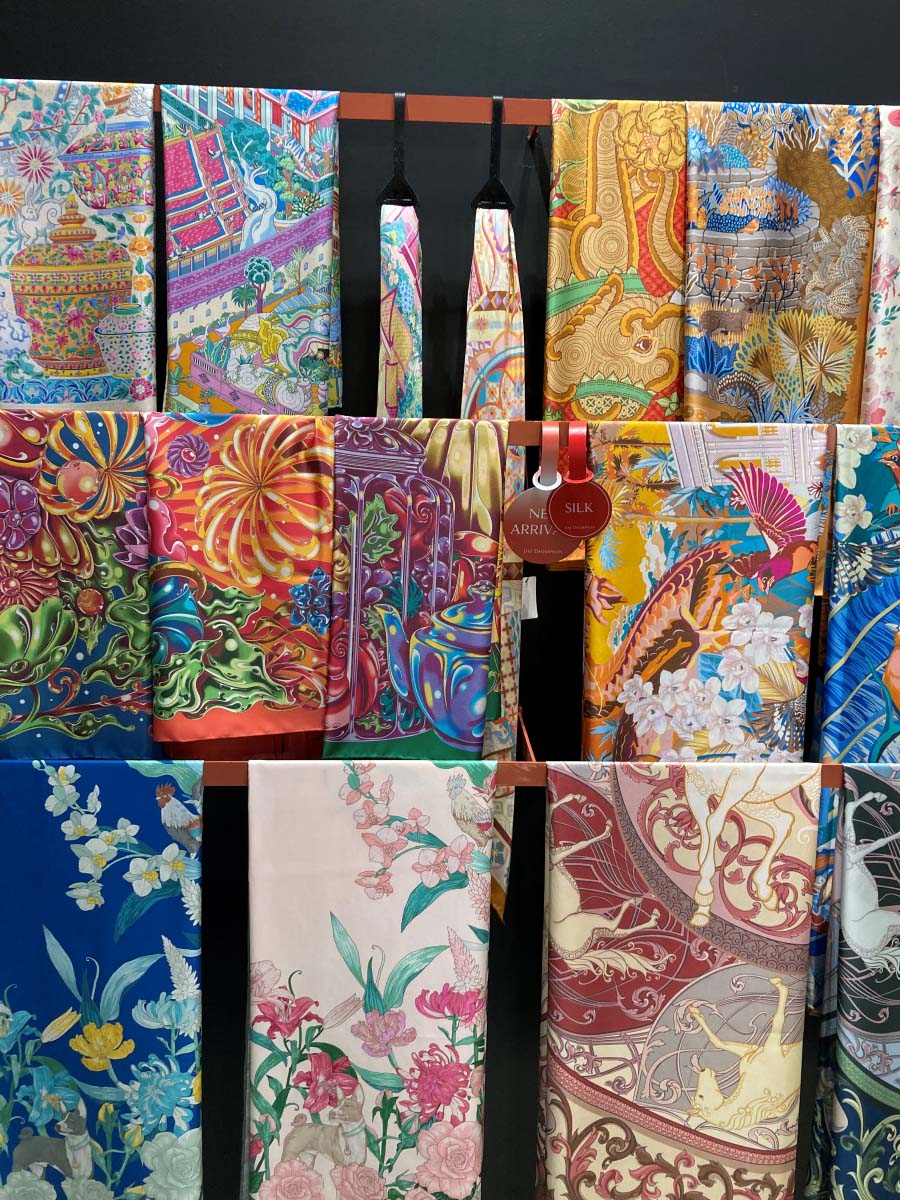
When we arrived at the entrance of the Jim Thompson House area, to the left was a large two-story Thai-style building serving as a shop selling various silk and cotton products, which we intended to visit before heading home.
To the right is a building for ticket sales. The admission fee for adults is 250 Baht. Tours are divided into rounds with guides who can speak multiple languages, such as English, French, Japanese, Chinese, and Thai. Before entering the museum, we used the restrooms, which are also located in this building.
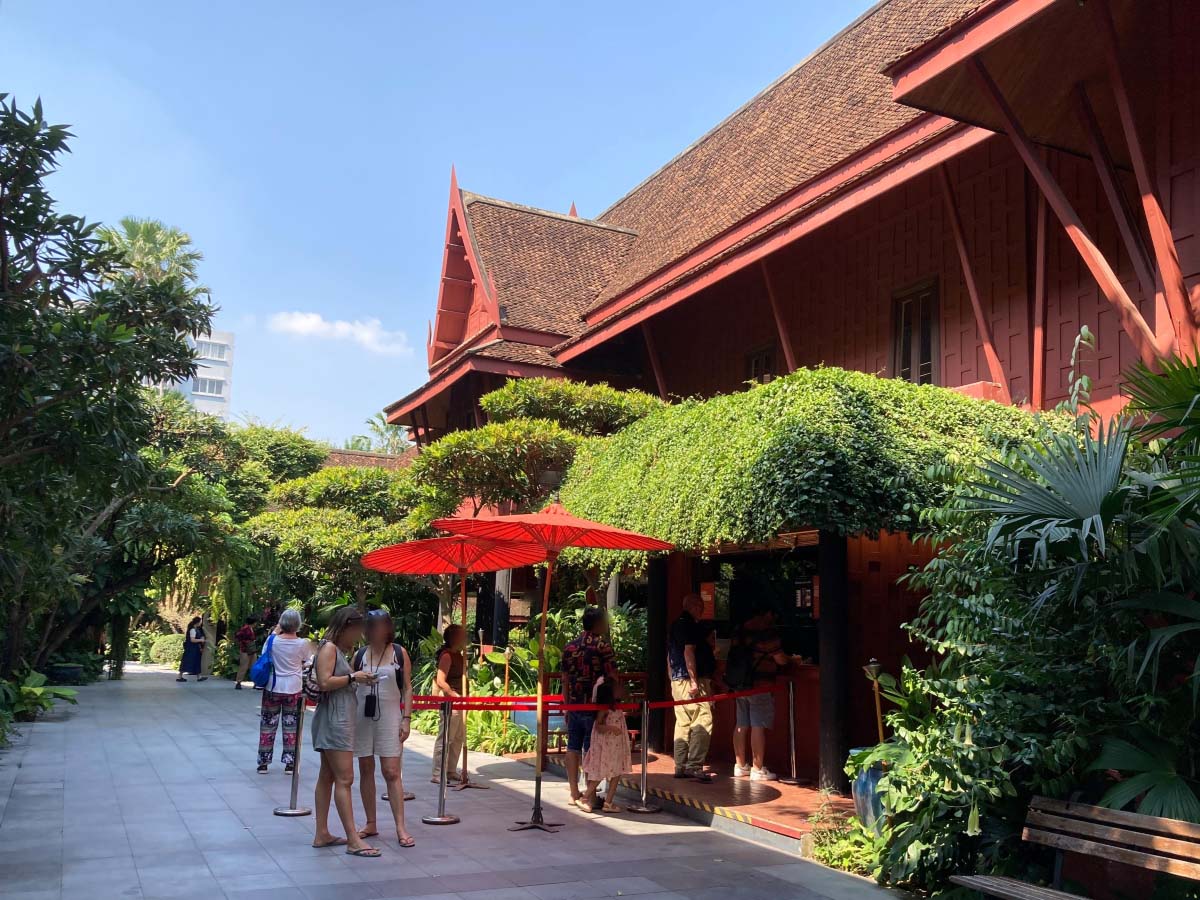
First Impressions
When it was time for our round, the ticket staff advised us to leave our bags in the provided lockers, especially bags larger than 20 cm. We also had to remove our shoes and place them on the shoe rack. Photography is allowed without flash, but selfies, portraits, and videos are strictly prohibited.
Since there were only two of us in the Thai group, our guide, named Khun Sai, took us to every point and explained little anecdotes to give us insight into the history behind this museum.
The first point we saw was the open-air basement area, which serves as a relaxing space. This area displays the story of weaving and features a weaving loom. On weekends, there are live weaving demonstrations, and today we were lucky enough to see one.
To the left, you can see a garden that Jim called “the jungle”. To the right is the Saen Saeb Canal, which serves as an entrance to the house with a small pier for boarding boats. Another entrance to the house is a small hall with a staircase leading to the second floor. In the past, both paths were used to receive Jim’s guests arriving by boat and by car.
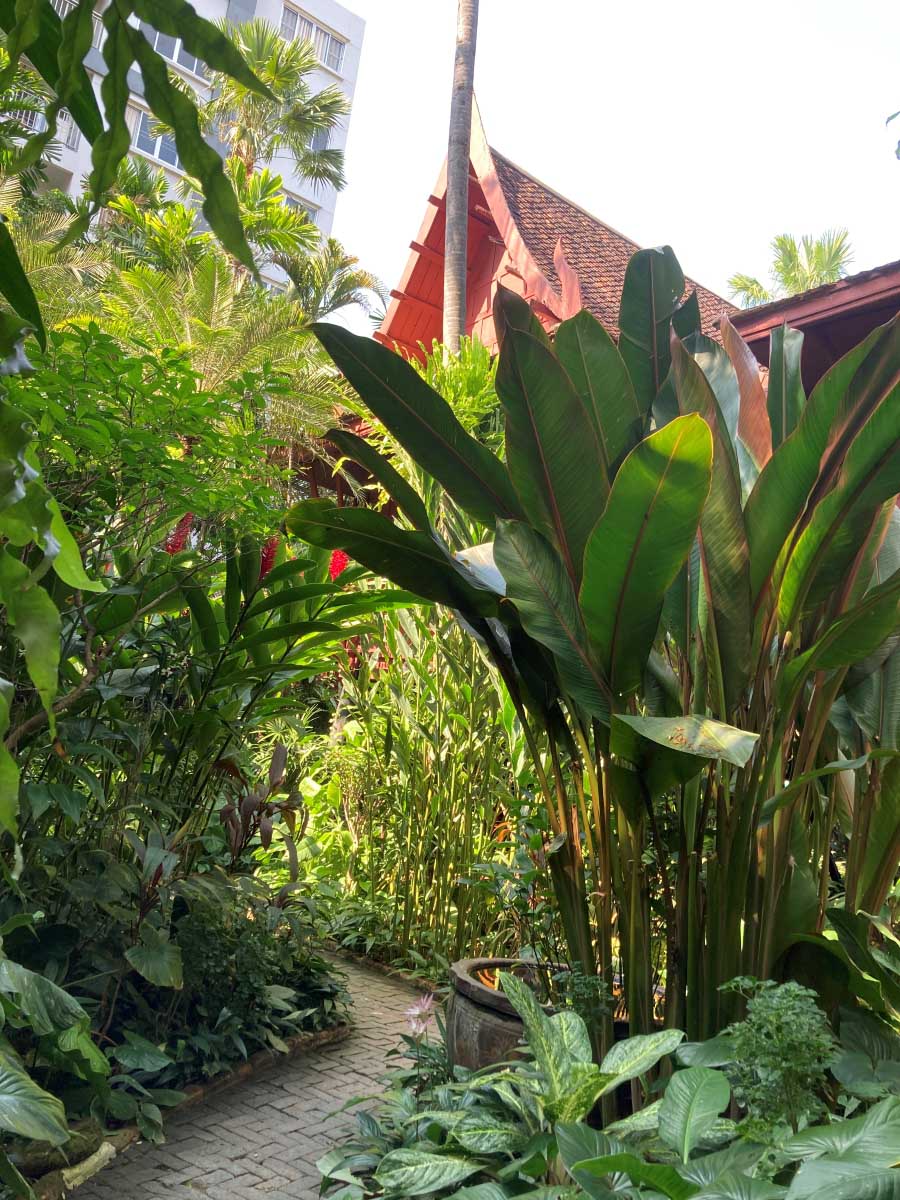
Architecture and Artistry: Inside the Teak Houses
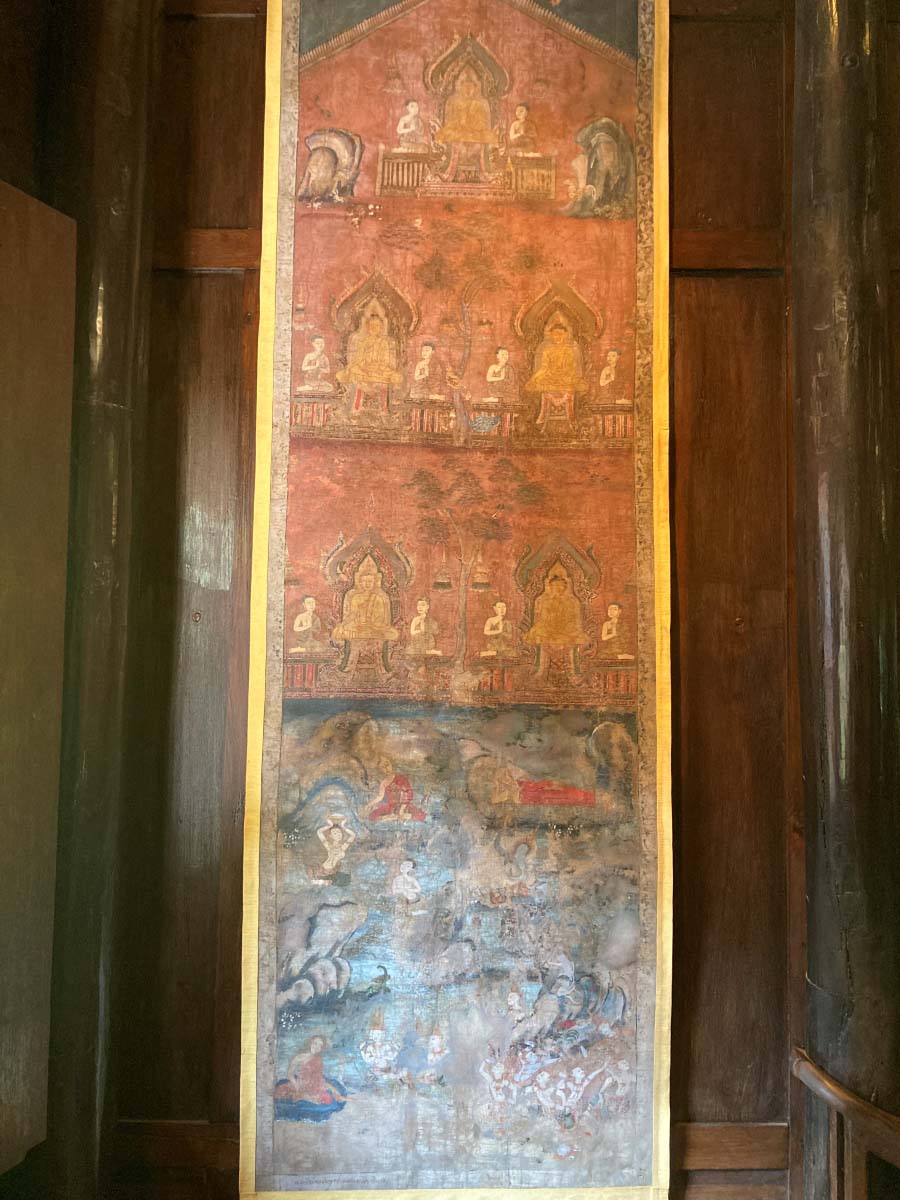
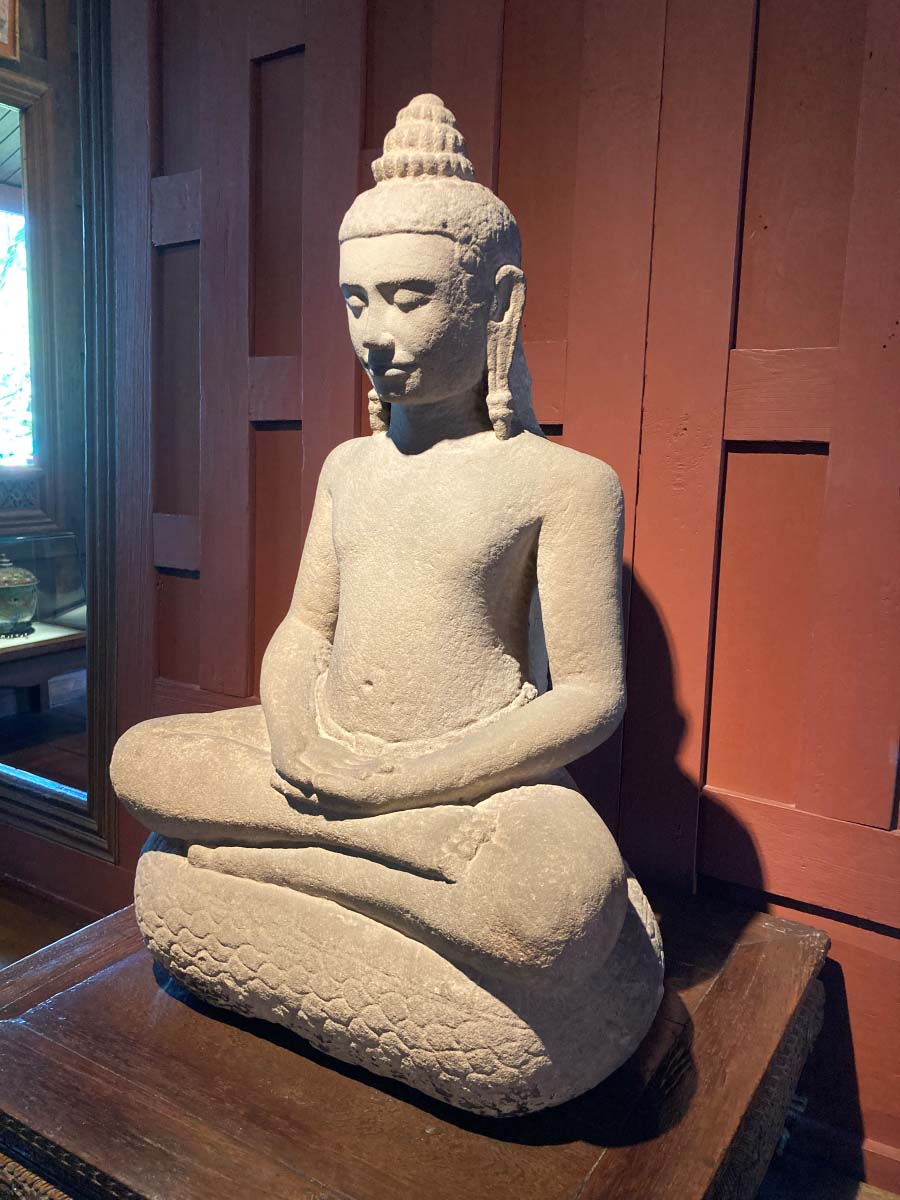
This small entrance hall features many beautiful decorations, such as exquisite Buddha statues in various postures. What I liked most and had never seen before were embroidered cloth paintings about the life of the Buddha. Khun Sai explained that in the past, rural temples did not have mural paintings in the chapels like they do today, so villagers relied on embroidered cloths hung on walls as Buddhist offerings instead.
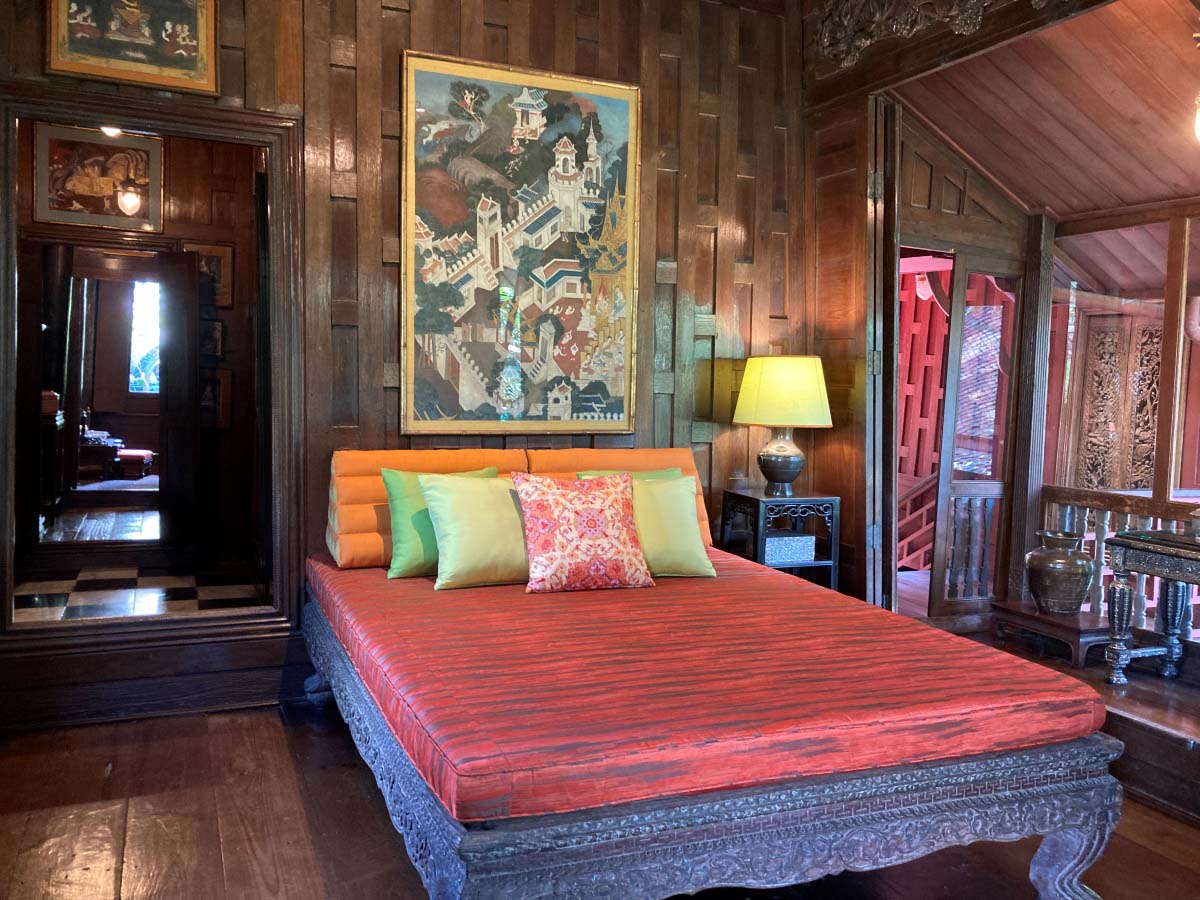
On the second floor, we found the dining room, kitchen, and a large open-plan living room facing the canal and the pier, with a staircase leading directly from the pier to the second-floor living room. This room is spacious and airy, decorated with many beautiful ancient artifacts and art pieces, some of which are from Southeast Asian countries.
Next is the guest bedroom, which has an en-suite bathroom. Usually, traditional Thai houses had bathrooms separate from the main house on the ground floor. This bedroom faces the garden below. Adjacent to it is Jim’s bedroom, facing the canal, which includes a walk-in closet and an en-suite bathroom. Other than that, there was a closed storage room, so we walked down the stairs at the back of the house. This concluded our stunning tour of the main house’s functional areas. We had to say goodbye to Khun Sai there and thanked her for providing such excellent knowledge.
However, let me mention a bit about Jim Thompson and the origin of this museum. It is well known that Jim Thompson was an American architect born in Greenville, Delaware, USA, in 1906. During World War II, Jim was a volunteer in the U.S. Army and moved to be stationed in Thailand in 1945 as part of the force planning to liberate Thailand. When the war ended before operations began, Jim resigned from military service and decided to return to live in Thailand permanently.
Jim became fascinated by hand-woven Thai silk, a cottage industry that had long been neglected, and decided to revive this craft. With his brilliance in the use of color, Jim succeeded in making Thai silk known worldwide.
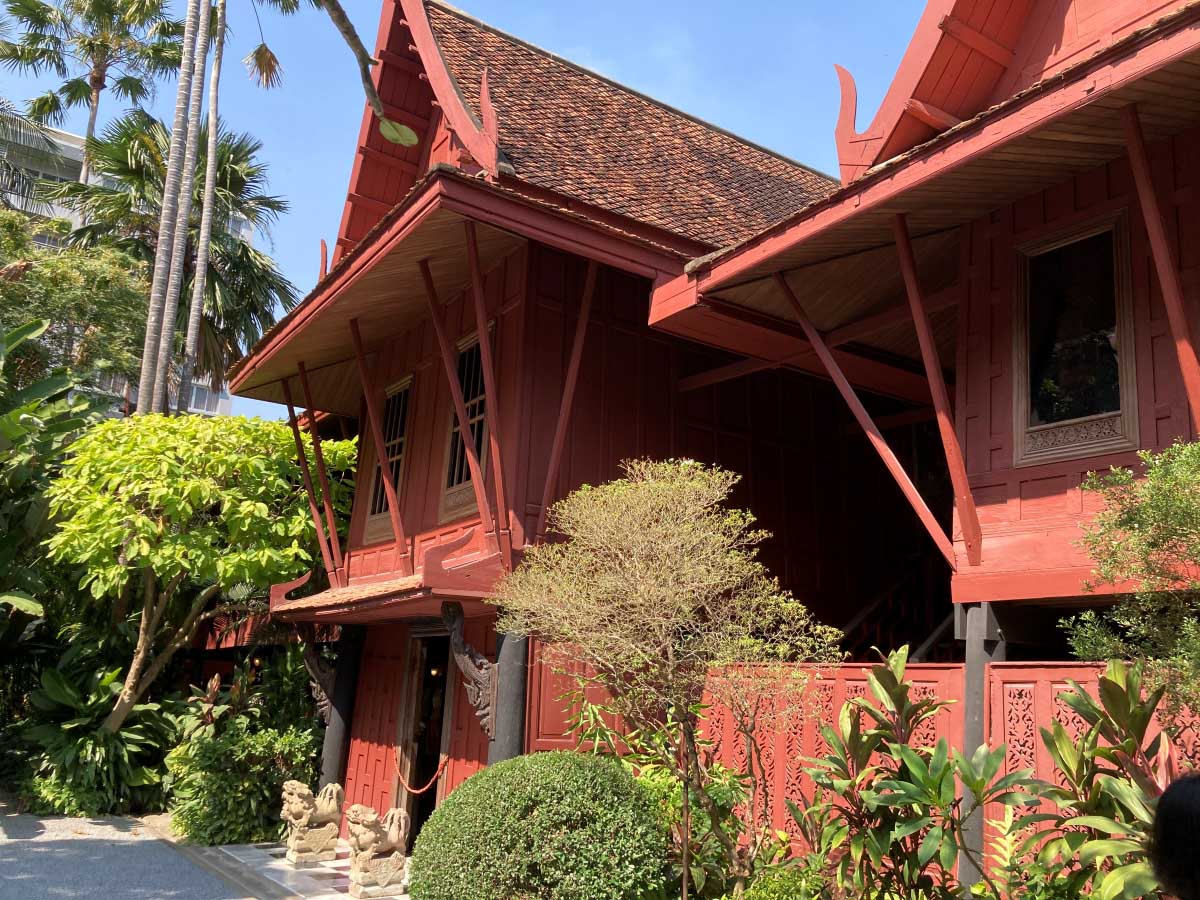
Additionally, Jim Thompson used his architectural skills to construct this Thai home from six beautiful traditional houses, at least 200 years old, which were dismantled and rebuilt on the current land.
Jim loved traveling throughout Thailand, and when he found beautiful artifacts in abandoned or damaged places that were not being repaired, he would contact the owners to purchase them and install them at this museum. Jim held ancient construction traditions in high regard. The house was raised one floor above the ground to prevent flooding during the rainy season. He used roof tiles from the Ayutthaya period, which are rare today, and painted all the wooden structures red to preserve the wood. Nevertheless, Jim seamlessly blended certain Western living cultures into the traditional Thai house.
The house and the art collection later became a point of public interest, so Jim opened the house for viewing and donated the proceeds to charities related to the preservation of Thai culture.
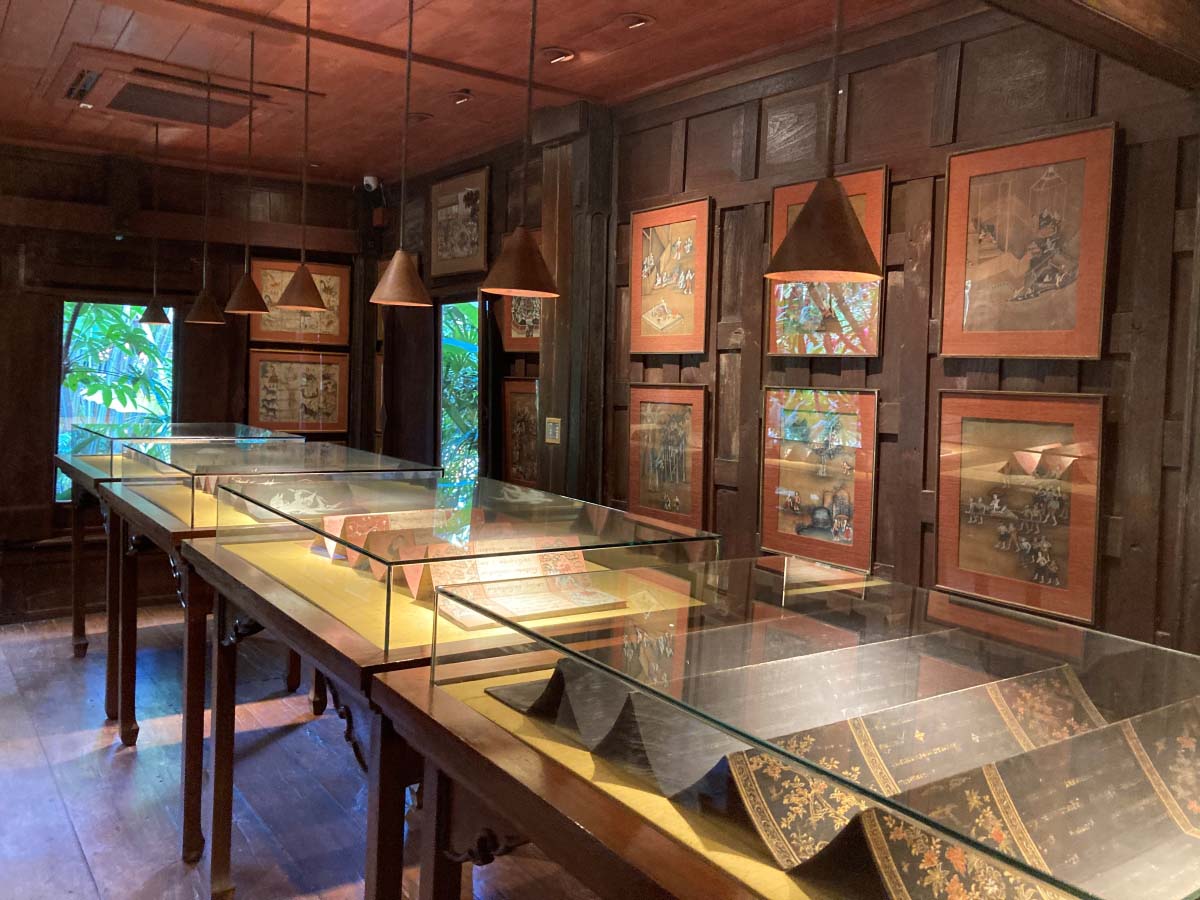
If you walk around Jim’s Thai houses, you will find 2-3 other single-story Thai houses surrounding his jungle garden. In the past, these were worker quarters, Jim’s office for inspecting weavers’ work, or even storage houses. They are still filled with collections, such as small Buddha statues, ancient ceramic bowls, and rare old palm-leaf scriptures.
Beyond the Museum
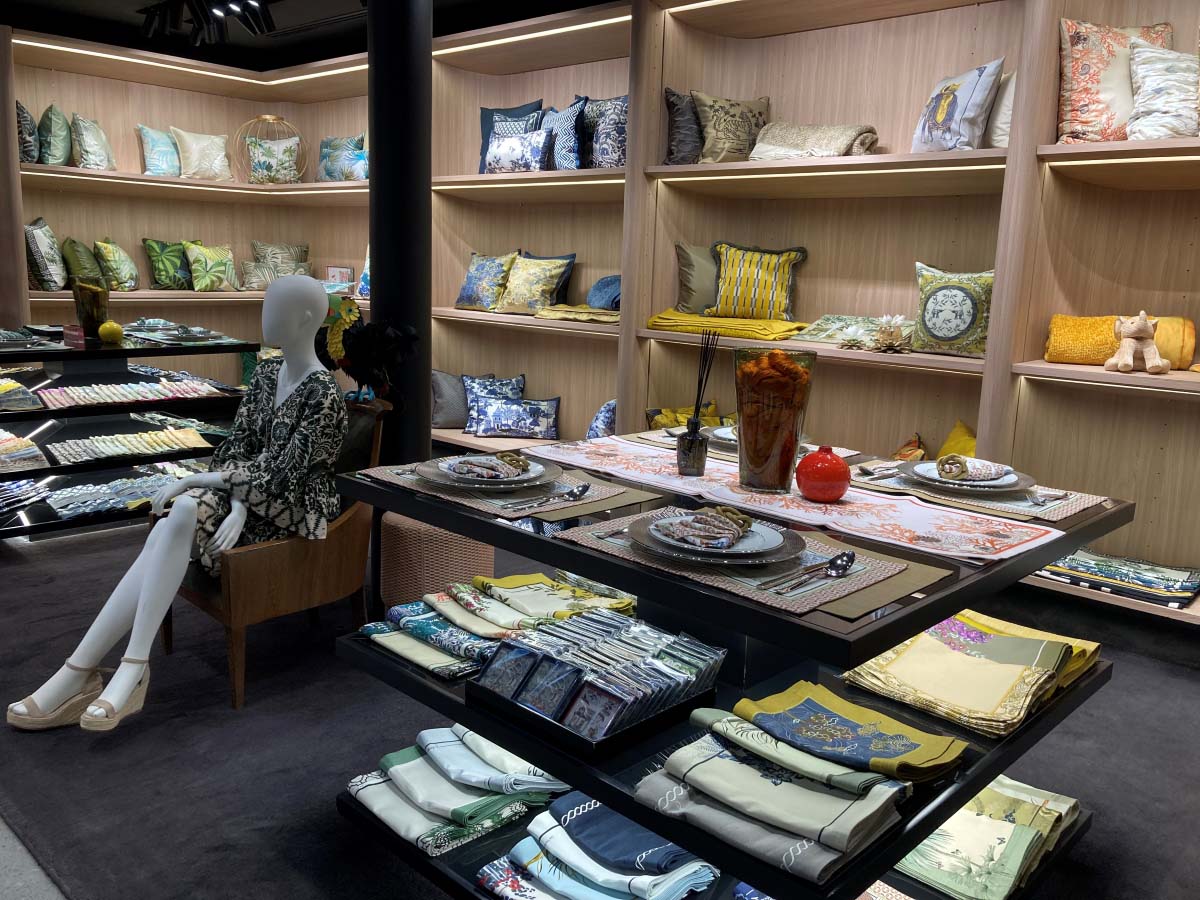
Finally, we reached the Thai-style building at the front entrance opposite the ticket booth. This building has two floors: the ground floor is a shop selling silk products like clothing, scarves, ties, and handbags in various beautiful Thai patterns. Part of the second floor is also a shop, while another part is an exhibition room telling the history of the Jim Thompson House, including the world-famous Thai silk works and the history and works of Jim Thompson’s fabric designers through different eras. There is also an elevator for those who find stairs inconvenient.
Even though Jim Thompson mysteriously disappeared in the forest of northern Malaysia on March 26, 1967, while on vacation, the Jim Thompson Thai House remains a memorial to his creativity and deep love for Thailand.
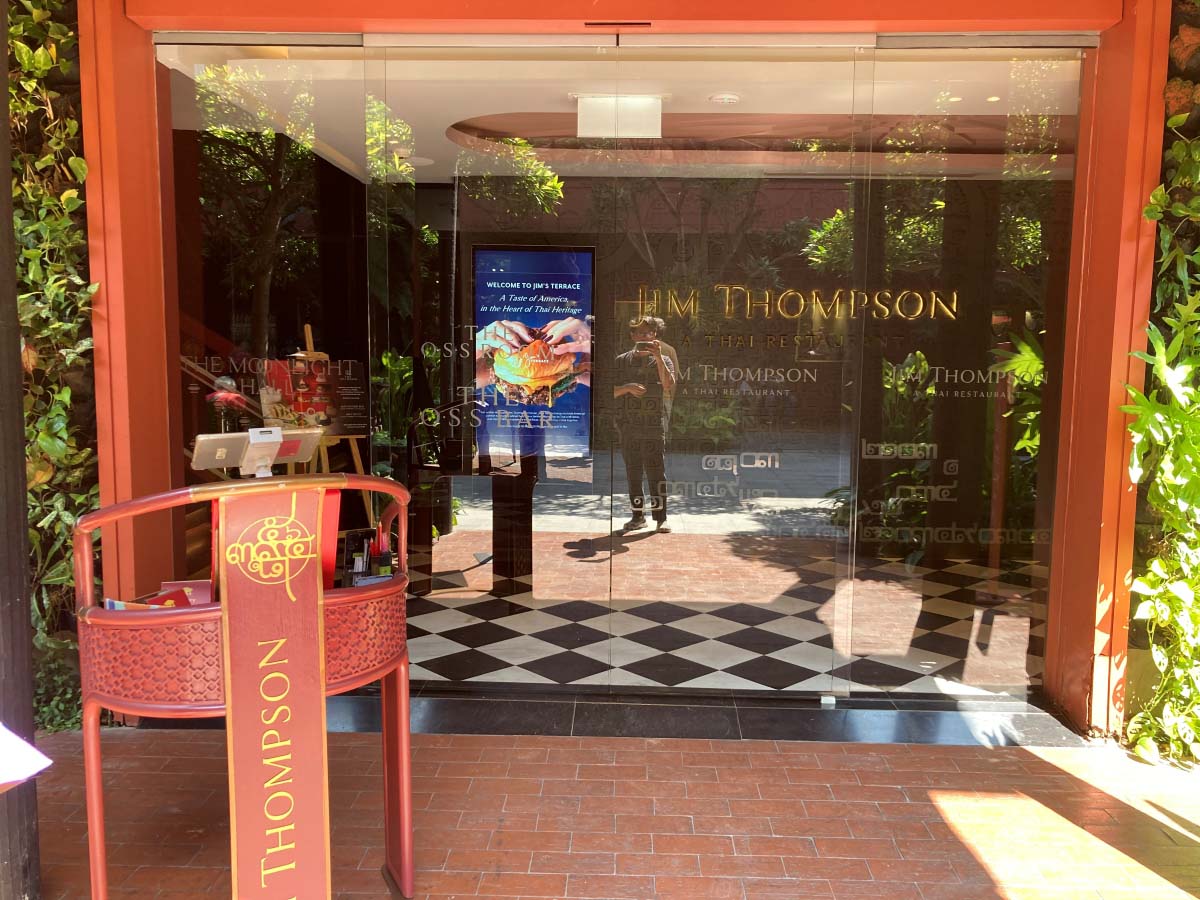
Before leaving, if you want to rest and have coffee or tea, there is a restaurant available. The O.S.S. Room is located next to the ticket building, surrounded by lush gardens. It serves a limited Afternoon Tea set that requires advance booking. In the evening, this restaurant turns into The O.S.S. Bar, serving drinks from 18:00 to 24:00.
A visit here does not disappoint. Beyond seeing the beautiful and priceless Thai houses and artifacts, the management of tour groups and the quality of the guides are excellent—organized, punctual, and not crowded.
For those who wish to visit, the Jim Thompson Museum is located at No. 6, Soi Kasemsan 2, Rama 1 Road, Bangkok. It is open daily from 9:00 AM to 6:00 PM.
Admission is 250 Baht for adults and 150 Baht for children aged 10-21 (ID or passport required). On the way back, if you don’t want to walk out of the alley because your legs are tired, the museum provides a free shuttle tuk-tuk service to the mouth of the alley.