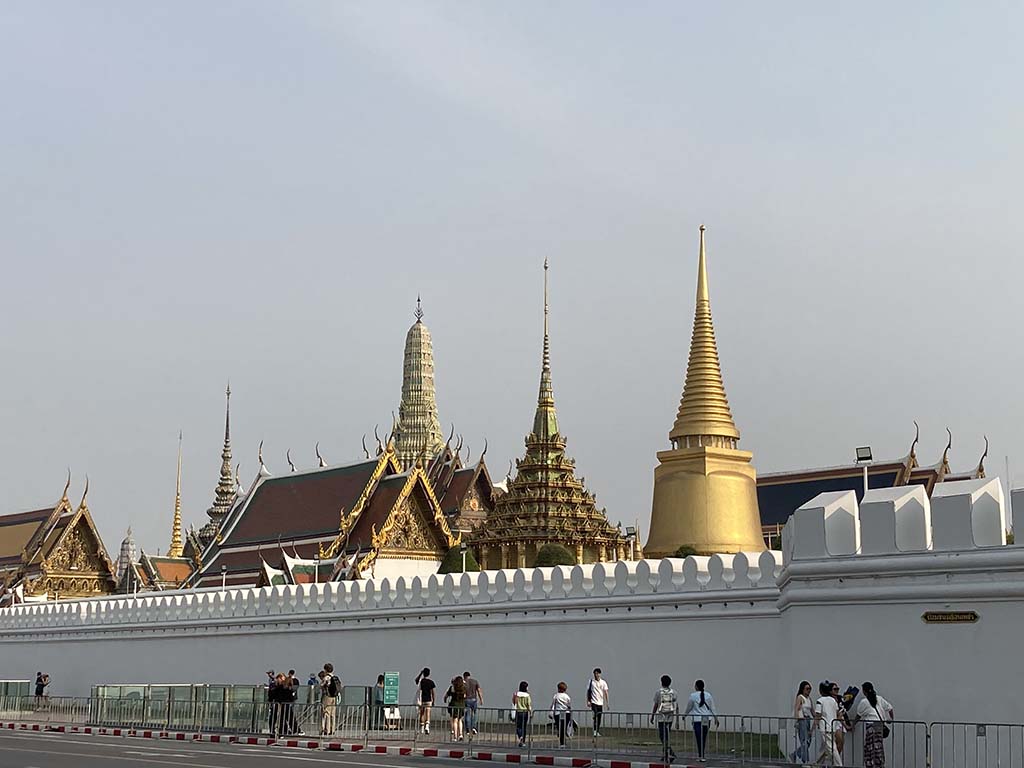
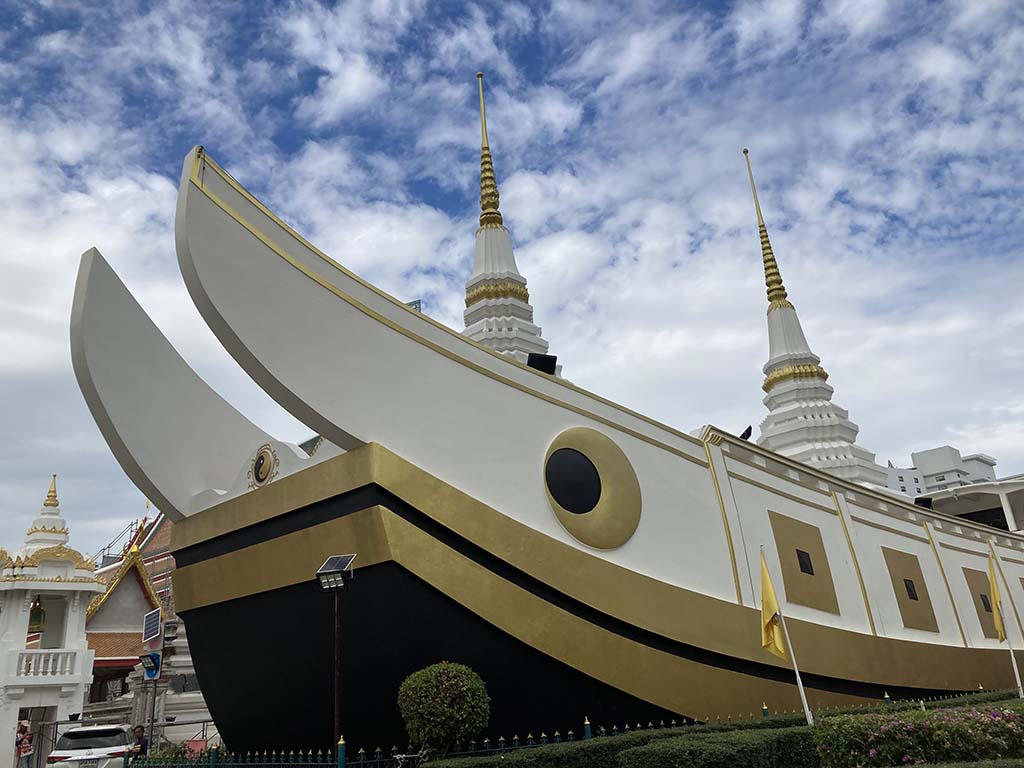
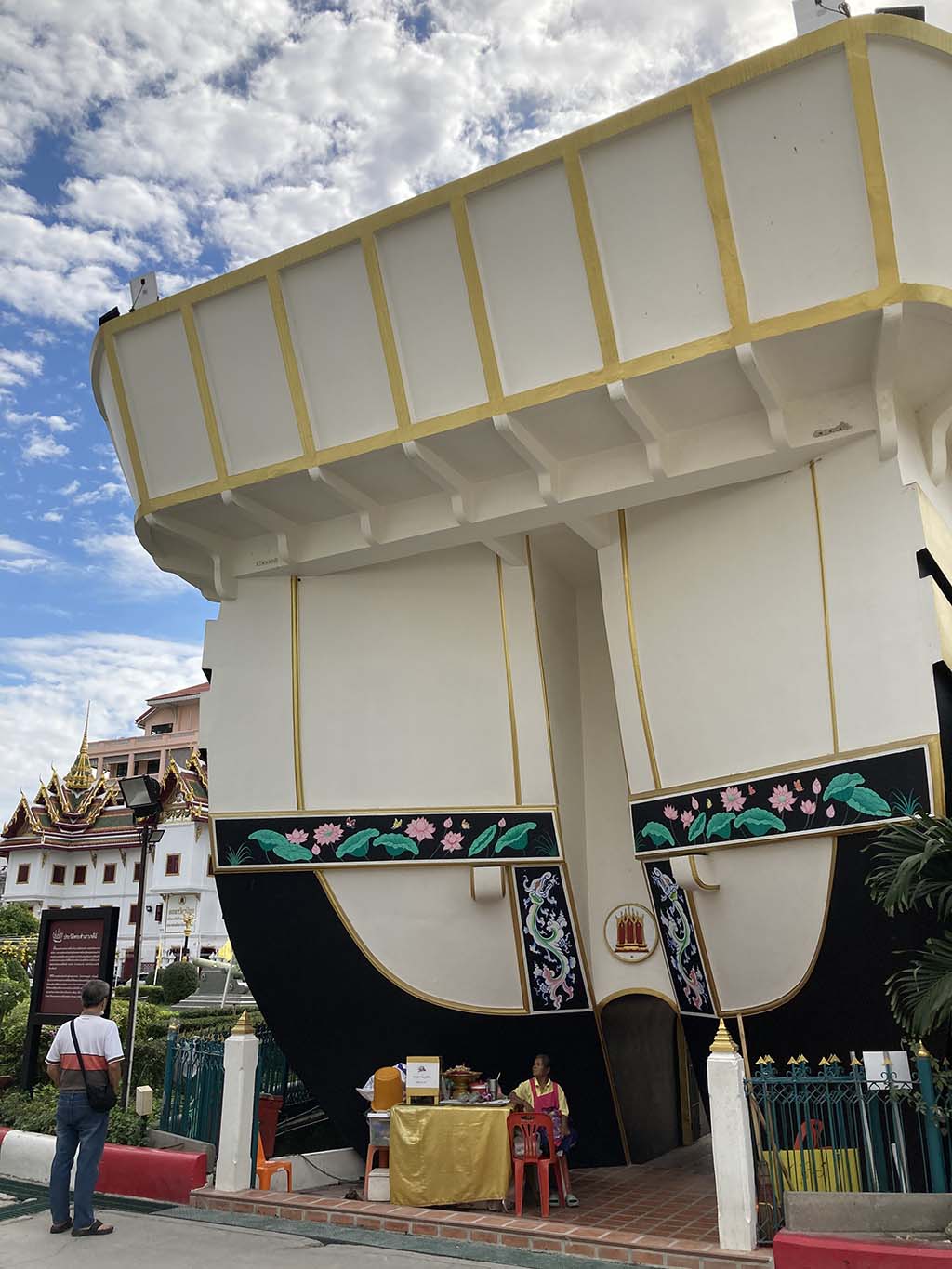
This is an iconic temple in Bangkok which I heard the name so many times since I was very young, but I am not sure if it has been heard among the tourists. If my memory is still clear, I read about it from the history textbook many times. It is not because it is an old temple, but because of the name of the temple. In Thai, “Yannawa” means “Boat”. Of course, if you are a kid, you will question “why the name of this temple means boat” or “does it has anything to do with the navy warship” but “why does the warship have “eyes” and it seems smiling”, judging from the image cover in the textbook which is exactly the same with the picture I took above. Hahaha. Anyway, I had a chance to visit this “Boat Temple” recently by myself and learned a lot about it. Here is the magnificent story of this place.
The Story of Boat Shaped Chedi
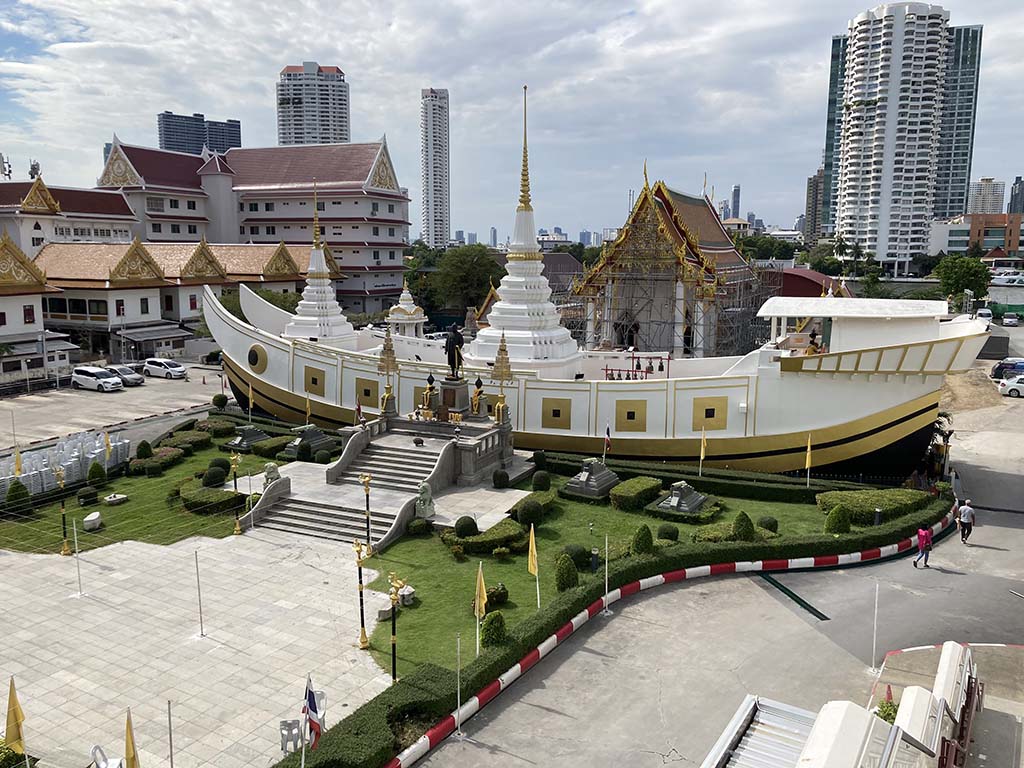
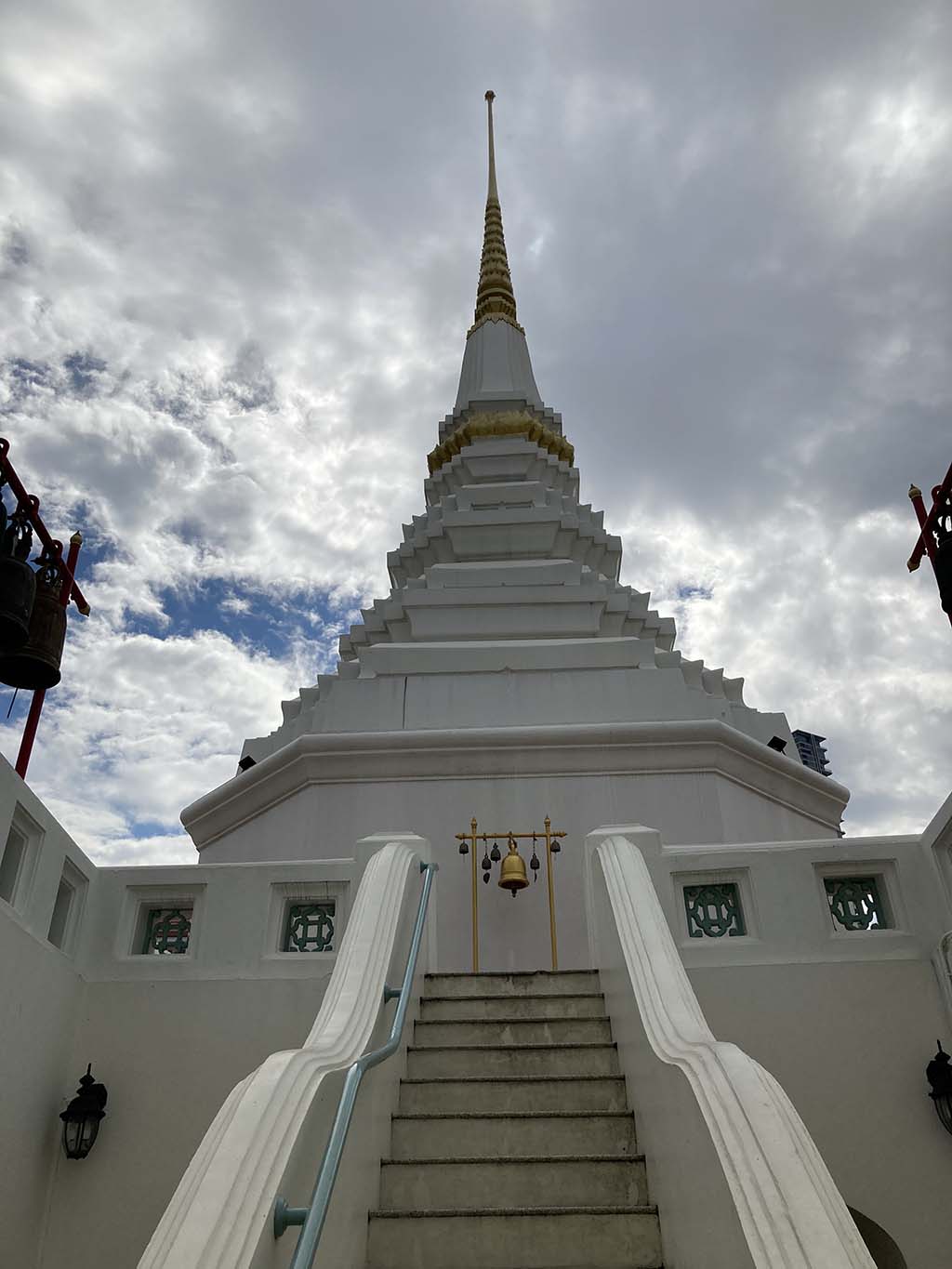
If you are heading to Asiatique by boat from Saphan Taksin pier, you must definitely notice a giant boat-like structure, stunning and steadily standing at the bank, contrasting to the strong tide of the Chaophraya river. This is the main chedi of the temple which was constructed during the reign of King Rama III (1824-1851), which is over 150 years ago.
King Rama III was a true master of naval trading. During his reign, it was the moment where the economy was booming and trading was flourishing, especially between big nations like China. Since a long time ago, the naval trading missions were committed using Chinese junk boats, giant wind sailing boats which were the most advanced and efficient at that time. However, at some point in history, a new steam mechanic ship came and proved to be more efficient in naval trading. King Rama III foresaw that the Chinese junks would eventually disappear someday and would like to preserve the memory of the Chinese junk, as well as the success of his naval trading missions, so he ordered the construction of an imitated structure of the Chinese junk in a temple, based on the same size and shape of the real Chinese junk boat that was actually used in the past. Inside this boat-like structure, there are also stupa structures, which locally called ‘chedi,’ house relics of the Buddha inside. Some called the entire boat-like structure as the part of the entire chedi, which is why it is also called the “Boat Shaped Chedi” as well.
After the reign of King Rama III, there was no construction of other boat-shaped chedi anywhere else. This means this boat-shaped chedi at Wat Yannawa is unique and cannot be found in any other temple in the country, which I believe is also the only place in the world as well.
You Can Go Inside The Boat
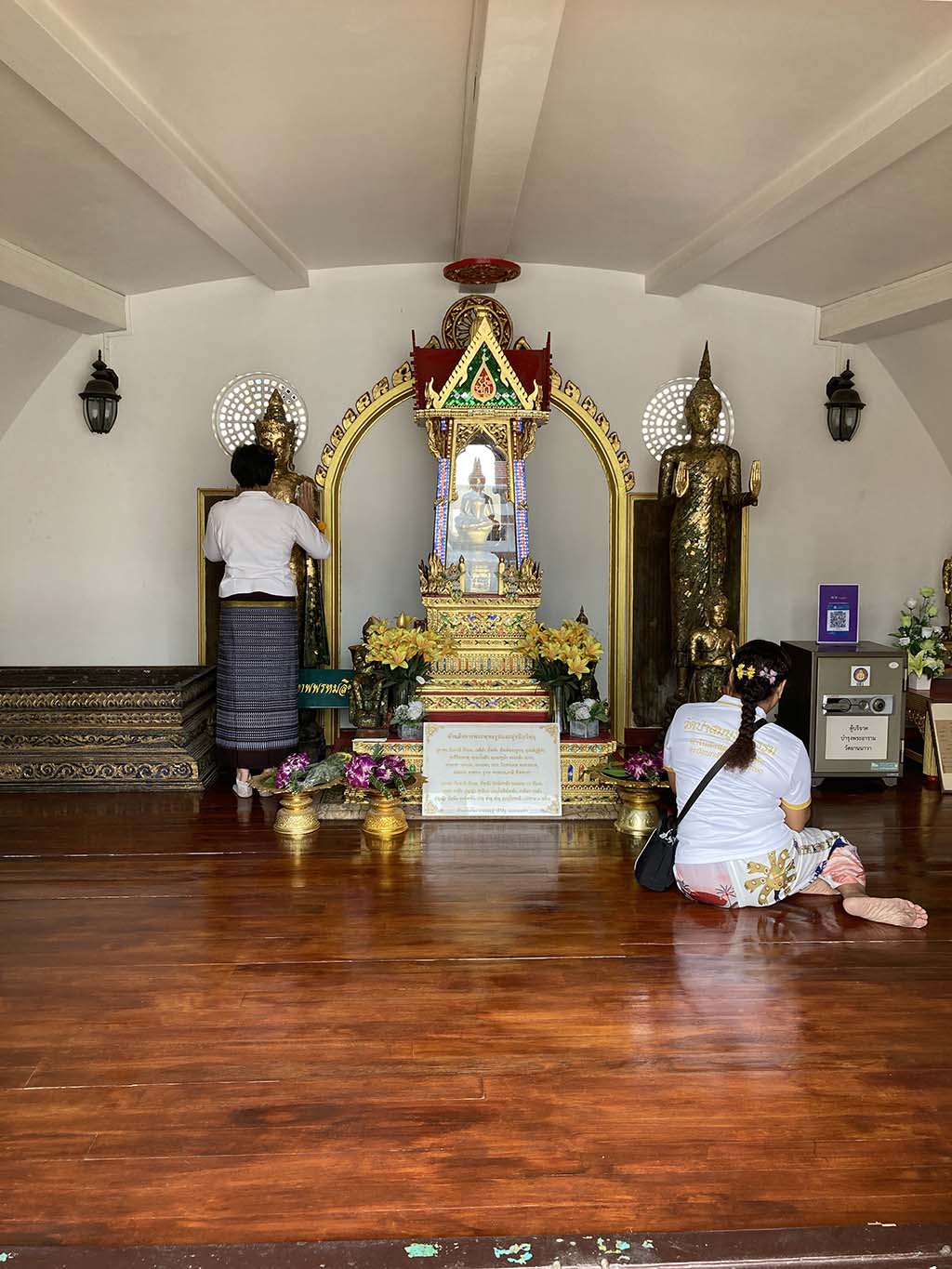
Even the boat was built as a memorial, but it is not only for show. Feel free to take photos with this marvelous structure outside and walk inside the boat using the entrance at the back. At the top of the deck, you will find a room with the Buddha statue where you can pray, make a wish, donate money etc. I recommend you to spend some time enjoying the view of Chaophraya river from the boat. It was strange for me that the wind was quite strong up there and it almost felt like I was on a real boat. Let me know in the comment as well if you have ever been here and experienced strong wind when you were on the boat.
More than The Boat: See Unique Paintings Inside Ubosot
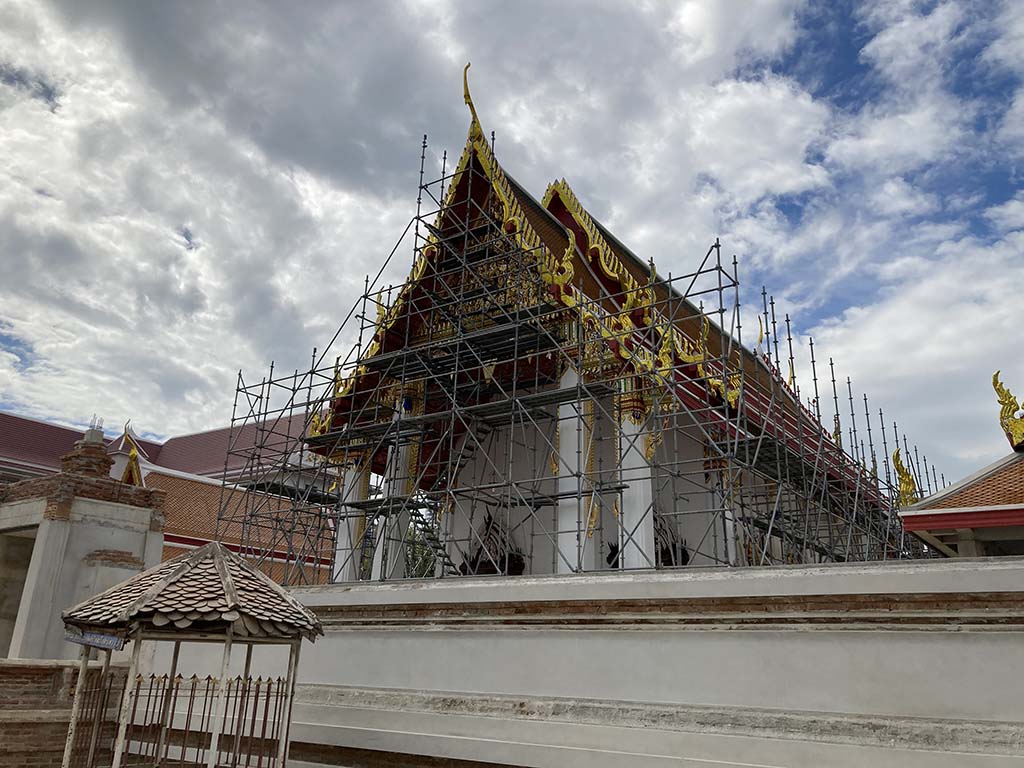
Ubosot of Wat Yannawa located at the back of the boat-shaped chedi. The building is now covered under the protective steel structure which helps preserve the Ubosot from rain damage and maintain its original condition.
Inside the Ubosot, the principal Buddha statue in the Mara Vichaya (Victory over Mara) posture is enshrined where you can pray to the Buddha statue and find some peaceful corner to meditate.
Well… Those are typical functions of the Ubosot you can find in any temple, but the highlight of this place is the paintings at the door of the building. If you carefully observe these paintings, you will see the image of krathong (floating lanterns) on the panels of both front and rear doors. The design of the main krathong imitates the krathong which is used during the royal Loy Krathong ceremony, the tradition to show respect to the river by lighting up krathong and float it along the river.
The tradition still carries until today. The ceremony usually occurs around the beginning of every November. If you visit Thailand around that time, you might have a chance to launch a floating lantern along the riverside as well! It can be done at Wat Yannawa, or many places by the river bank, piers, or even at the lake in the public park.
Opening Hours and Entrance Fee
Wat Yannawa opens daily from 7:00-18:00
Entrance fee: Everyone can enter the temple for free. However, the temple offers donation boxes where you should donate some money for the maintenance. I recommend donating between 5-20 Baht which is the usual rate the locals would donate. For sure, you can give more if you want to.
How to get there?
If you have a chance to pass by Saphan Taksin pier, you can always walk to this temple as it is very close to the Saphan Taksin pier and BTS Saphan Taksin station.
- By BTS. Take the BTS train Silom line (Dark green line) to Saphan Taksin station exit no. 3-4. Turn right and walk along Charoenkrung road for about 160 metres. The temple will be on the right. You can notice the massage place at the front of the temple.
- By Boat. Take the Chaophraya Express Boat to Saphan Taksin Pier. Walk along the walkway to Charoenkrung road for about 300 metres. Turn right and walk along Charoenkrung road for about 160 metres. The temple will be on the right. You can notice the massage place at the front of the temple.