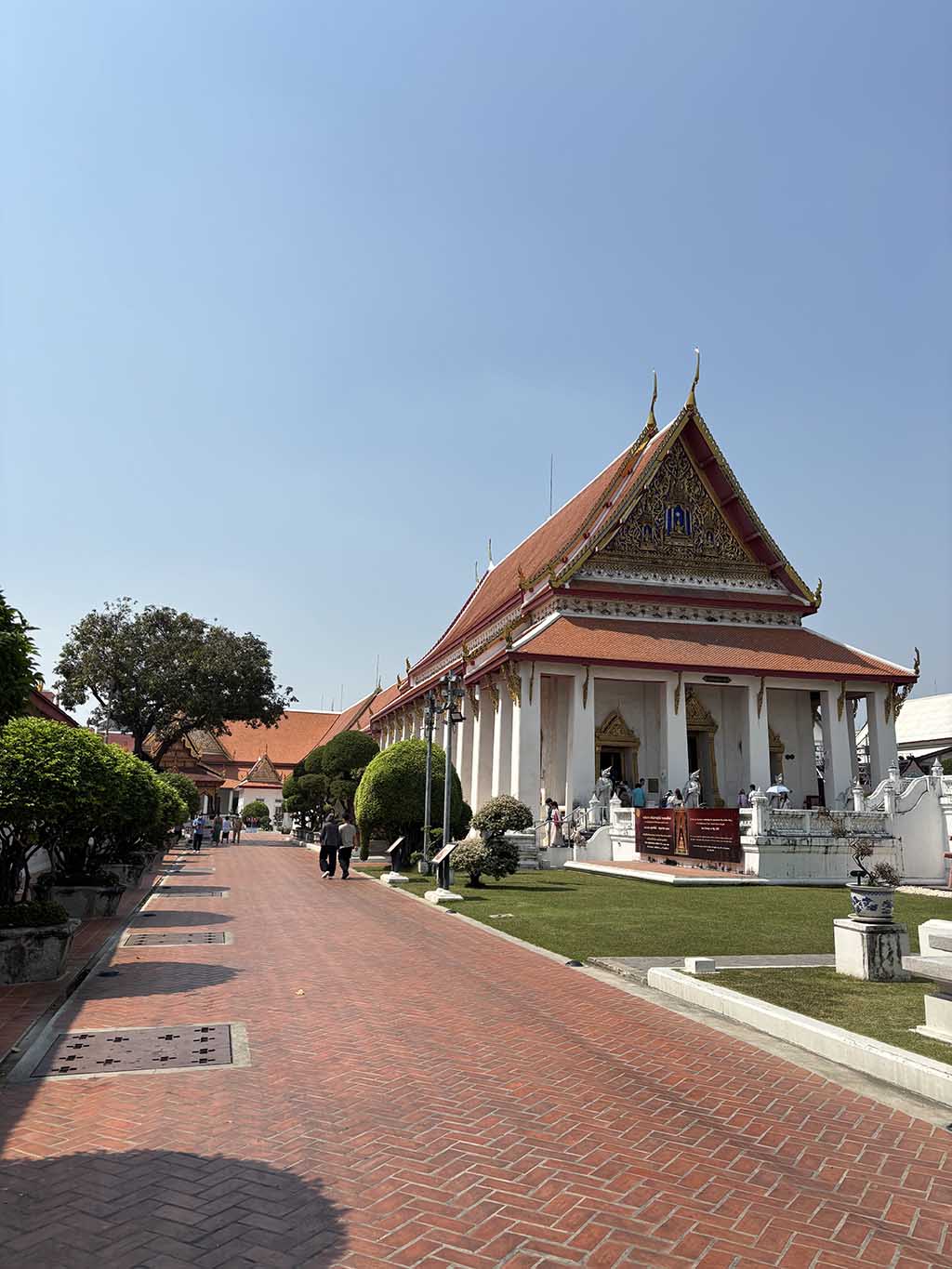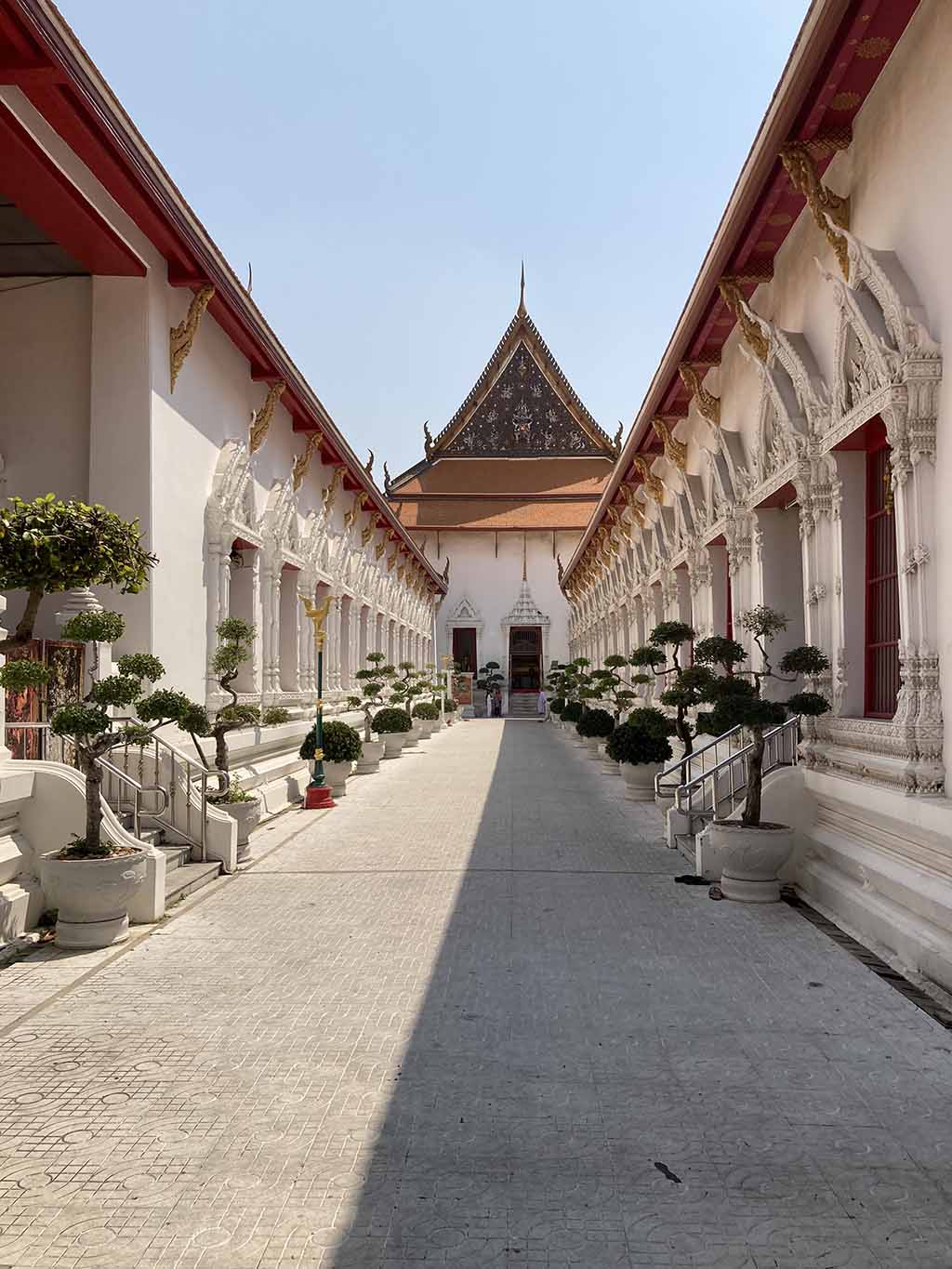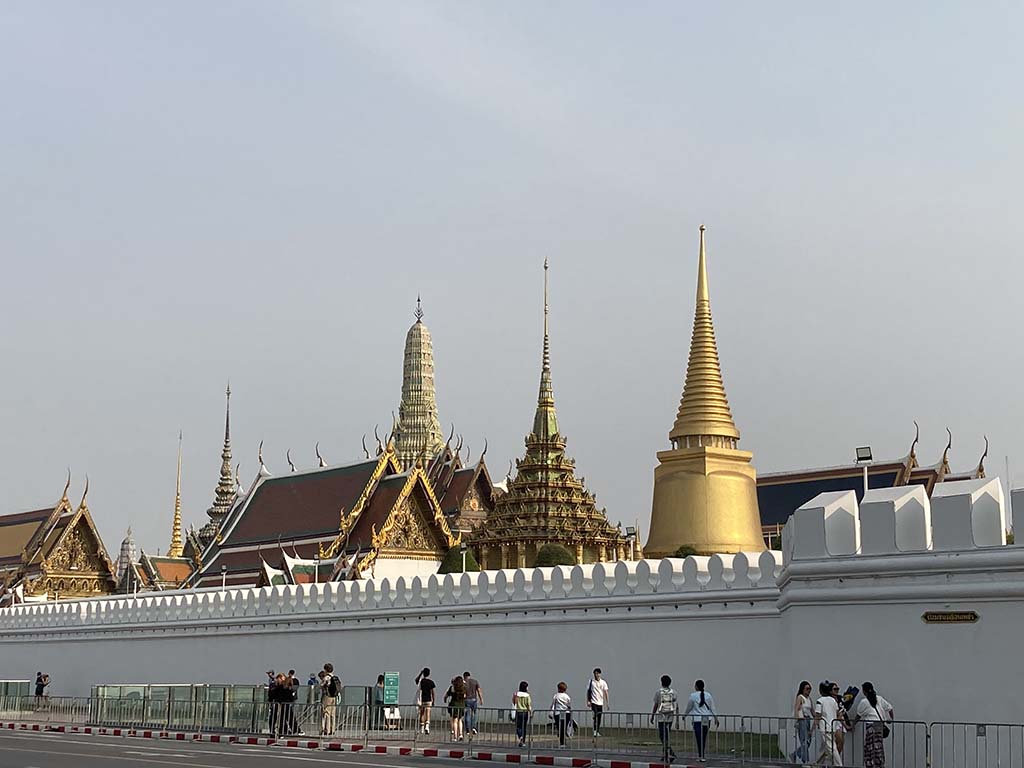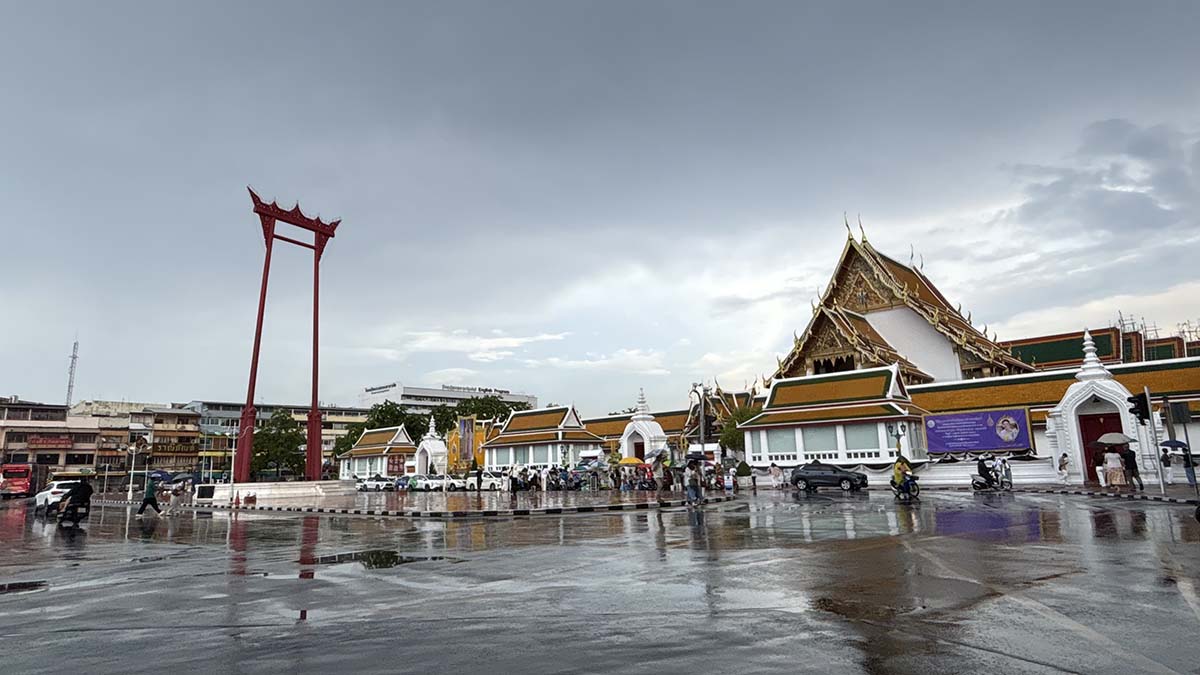
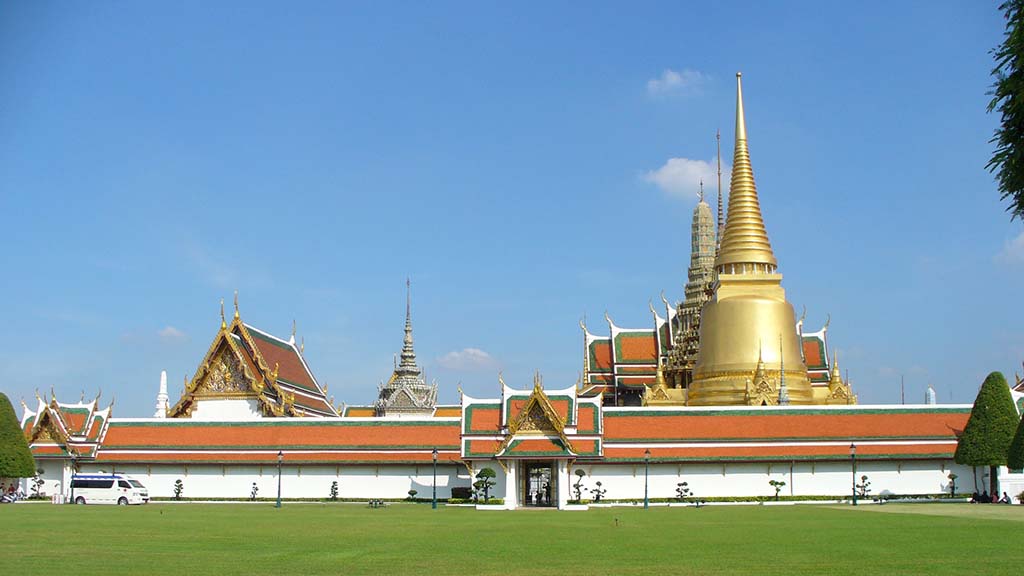
The Temple of the Emerald Buddha or Wat Phra Kaew is the temple inside the Grand Palace complex with the unique stunning architecture which you can tell right away that it is a Thai temple. It has so many interesting things to see inside and here is the highlight of this temple.
Brief History of Wat Phra Kaew
Before we go to the highlight, I think we should talk a bit about the history of the temple first. Wat Phra Kaew was constructed in 1782, during the reign of King Rama I, the founder of the Chakri Dynasty, the dynasty which is the current monarch of Thailand. It has been a long tradition of the royal families around the region to build a Buddhist temple inside the palace to show support to Buddhism and used for religious ceremonies of the Thai royal family.
The special characteristic of Wat Phra Kaew is that there is no monk inside the temple. Since the temple is constructed inside the Grand Palace complex, there is no space for monks to stay. Instead, monks will be summoned from the nearby temples to attend the ceremonies.
If you visit temples in Thailand more, you will notice that every temple must have a “main Buddha statue” which is usually a big, most important, and most revered by the people around that area. For Wat Phra Kaew, The Emerald Buddha is considered to be the main Buddha statue at this temple, which also has interesting stories behind it as well.
JourneyBliss tips: Hiring a local guide or renting an audio guide before entering the temple is recommended. The service can be booked at the ticket office upon entering the Grand Palace area. Hiring a local guide from the outside is also acceptable.
Beauty of The Emerald Buddha
The Emerald Buddha is a unique and sacred Buddha statue carved from a single piece of jade in meditation posture. The Emerald Buddha was discovered by accident in 1434 under a ruined chedi in the northern region of Thailand which is part of Chiang Rai Province as of now. It is regarded as a symbol of the nation, as it has been revered and passed down through several monarchs across various dynasties in the region. It is also a shared belief across many ancient city states in the region that Emerald Buddha brings prosperity to the nation of the owner.
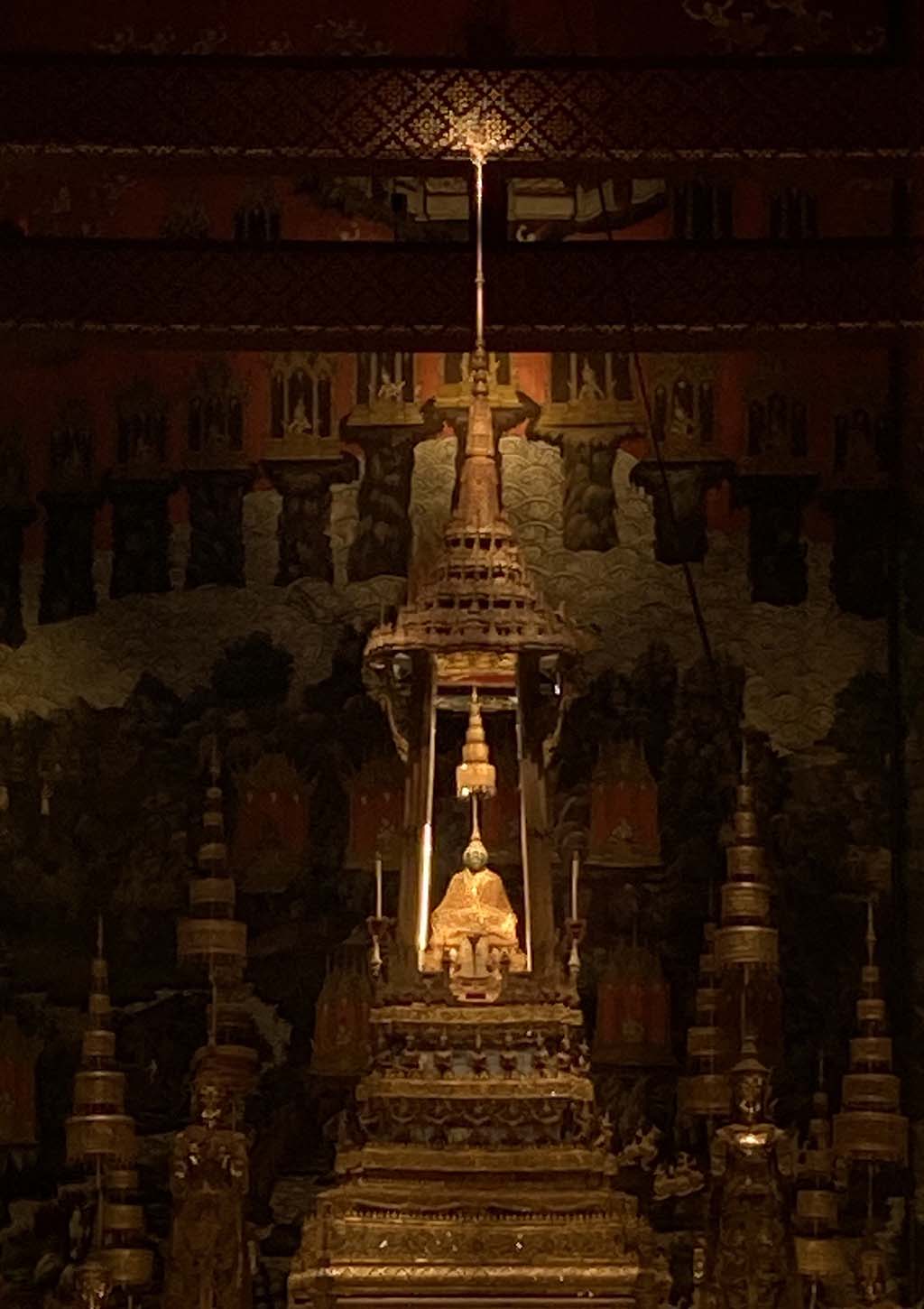
The other uniqueness of the Emerald Buddha, apart from the long history, is the attire which is uniquely designed for each respective season. Each year, the King of Thailand ceremonially changes the Emerald Buddha’s seasonal attire three times – Summer (April-August), Rainy season (August-December), and Winter (December-April).
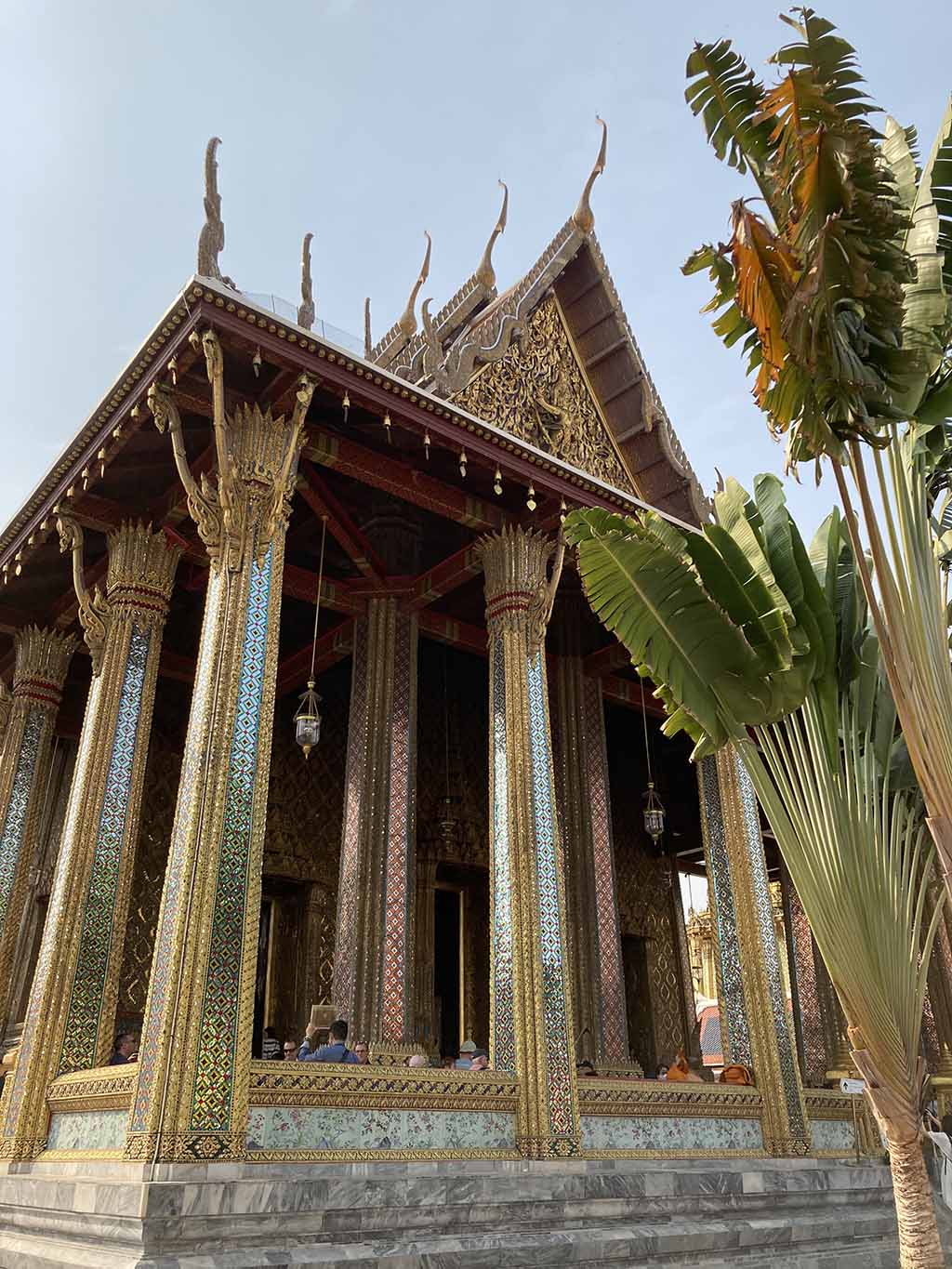
You can spend some time and pray to The Emerald Buddha. You can do it both inside or outside of the Ubosot. The advantage of praying inside the Ubosot is the noise is much lower. However, it can be crowded and difficult to find a place to sit. Moreover, if you prefer to lighten the candle or incense, you have to do it outside the building only. There are two joss stick pots in service outside, one at the front and one at the back.
If you are not Buddhist or enjoy praying, at least just enter the building and admire the beauty of the Emerald Buddha and its seasonal attire.
Ramakian Mural Cloisters
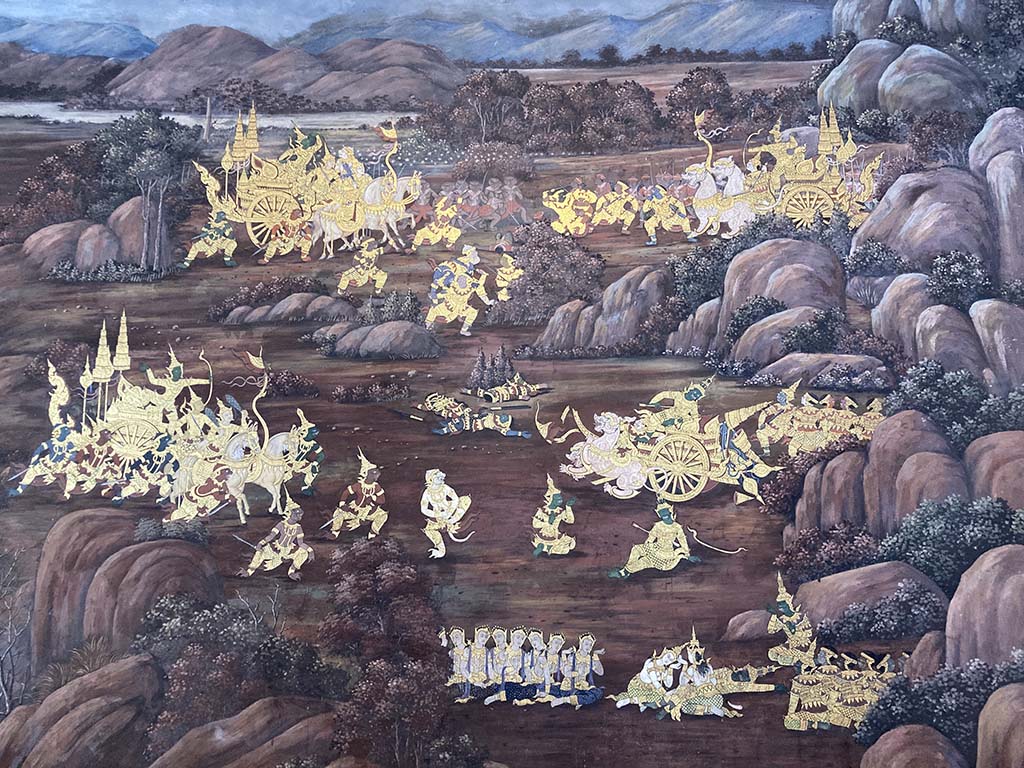
Ramakian or Ramayana is an ancient literature that narrates the story of Rama, a virtuous prince and an incarnation of the god Vishnu, who embarks on a quest to rescue his wife, Sita, from the demon king Ravana.
The literature is widely esteemed among the rulers of Southeast Asia as a profound affirmation of the monarch’s role in upholding moral virtue, like the character of Rama in the epic.
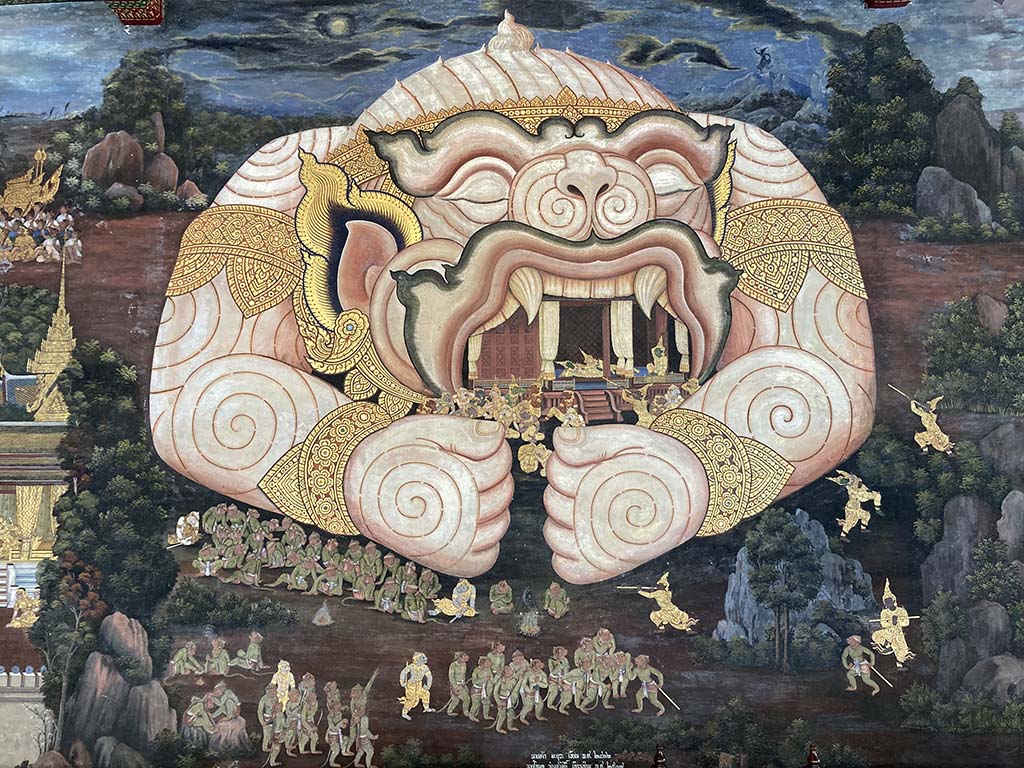
Around the area of the Temple, the wall of the cloisters has painted the story of Ramakian. Feel free to appreciate its beauty and take a photo of any painting you like. It is also recommended to hire a local guide to give you more information about the story of Ramakian and the meaning of each scene.
Amazing Architect of the Buildings Around
The temple of the Emerald Buddha has been carefully renovated by many kings to preserve its beauty and the functionality of the temple. Therefore, you will also see many buildings inside the area of the temple which serve different functions. Here are the highlights:
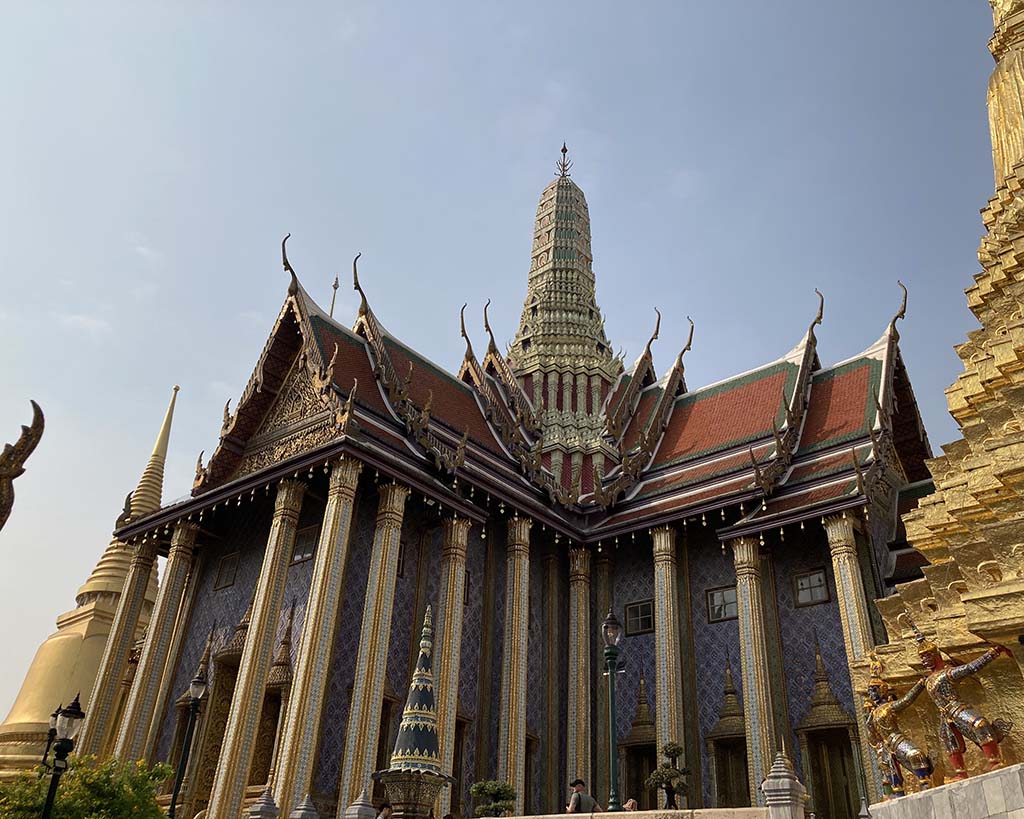
- Prasat Phra Thep Bidon: The Royal Pantheon
In 1903, King Rama VI created life-sized statues of the former sovereigns of the Royal House of Chakri placed inside this building to commemorate his predecessors. Nowadays, the Royal Pantheon presents the statues of King Rama I to Rama IX and is used for royal ceremonies.
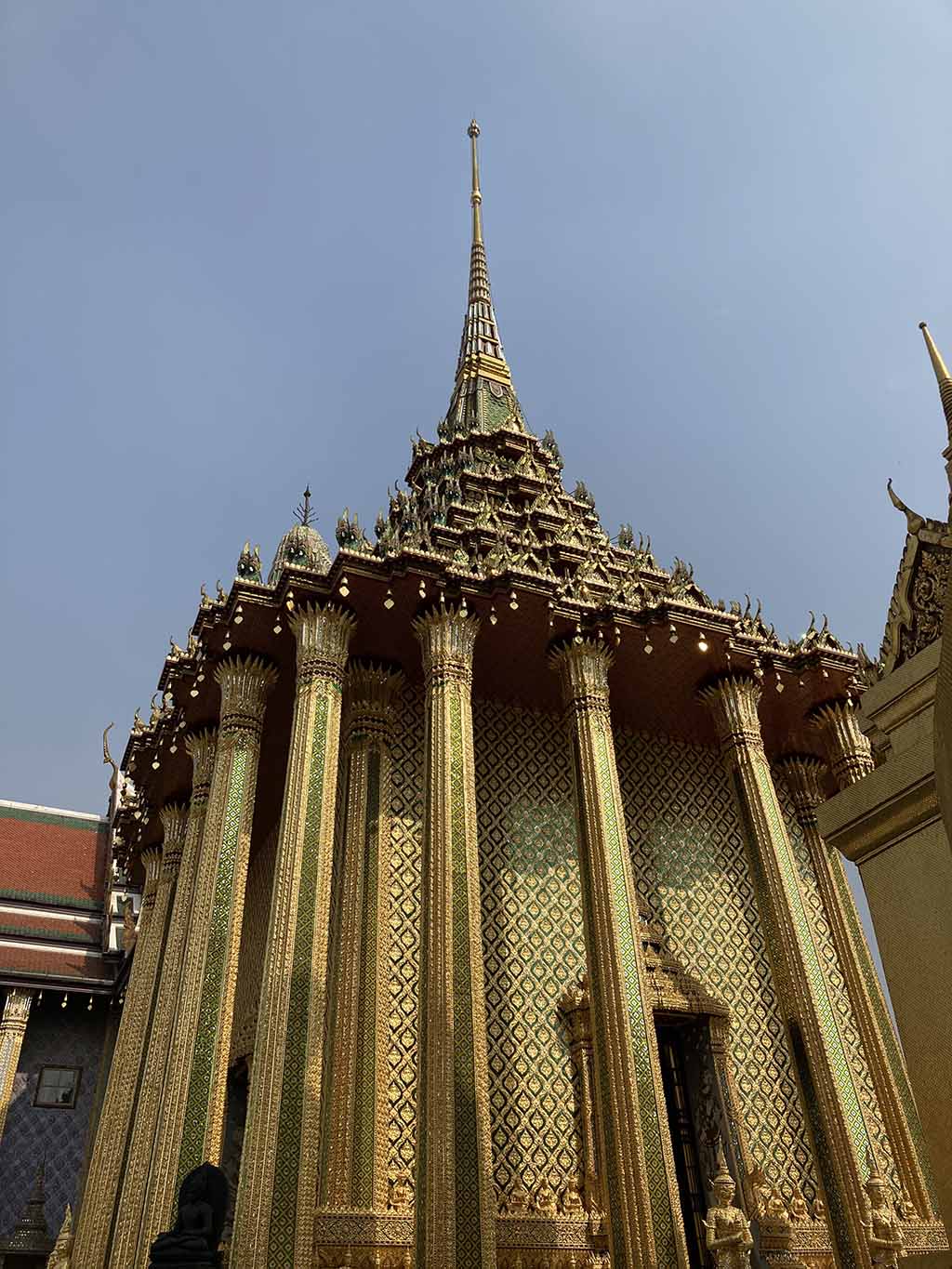
- Phra Mondop
Phra Mondop is the building next to The Royal Pantheon with its unique square-shape roof. The place is built to keep the palm leaf Buddhist Tripitaka scriptures – the bible of the Buddhism world – which were created in 1789.
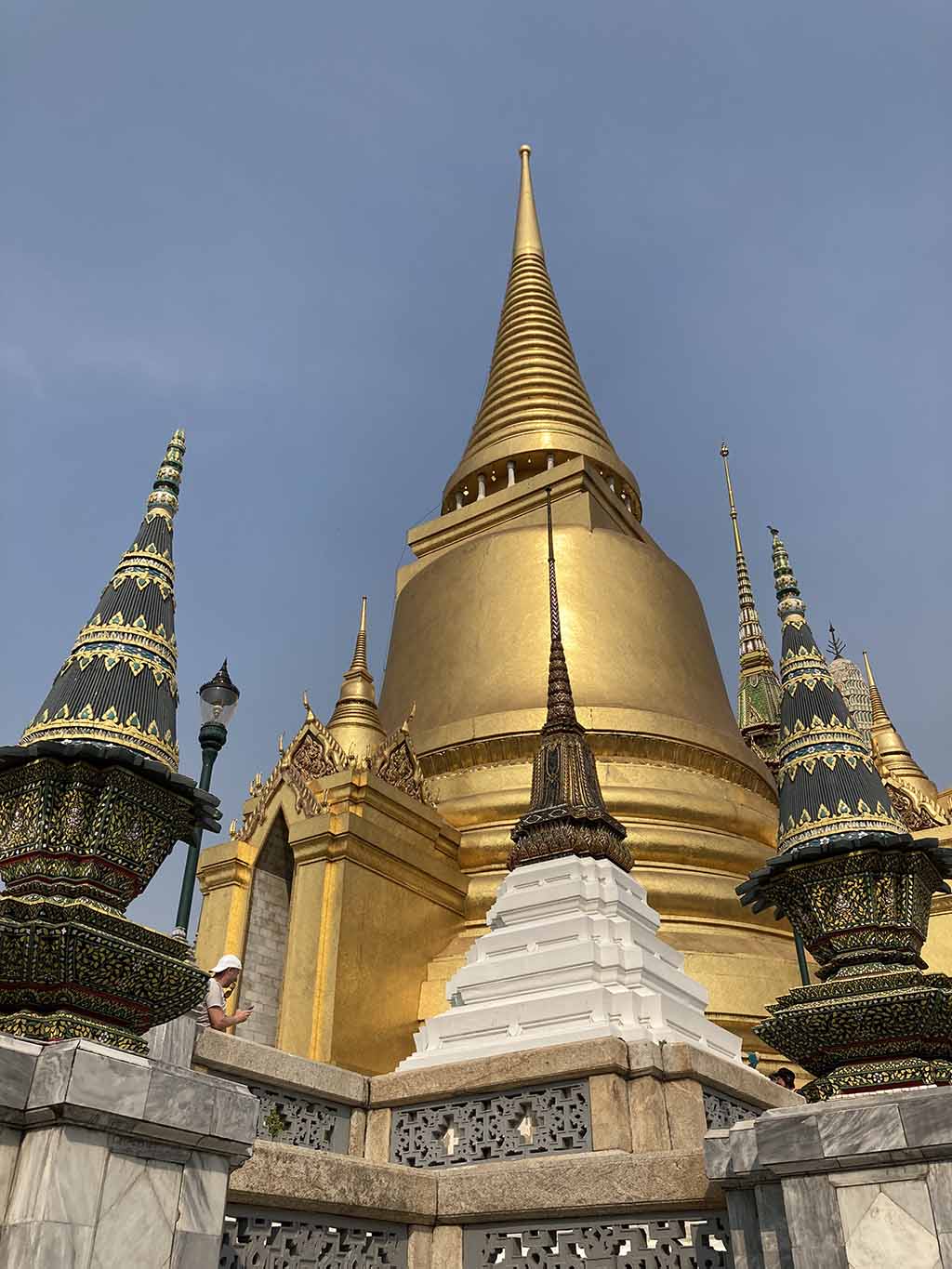
- Phra Sri Rattana Chedi
This stunning golden chedi next to Phra Mondop enshrines the Relics of the Buddha which are parts of the Buddha’s body that were left after the body was incinerated.
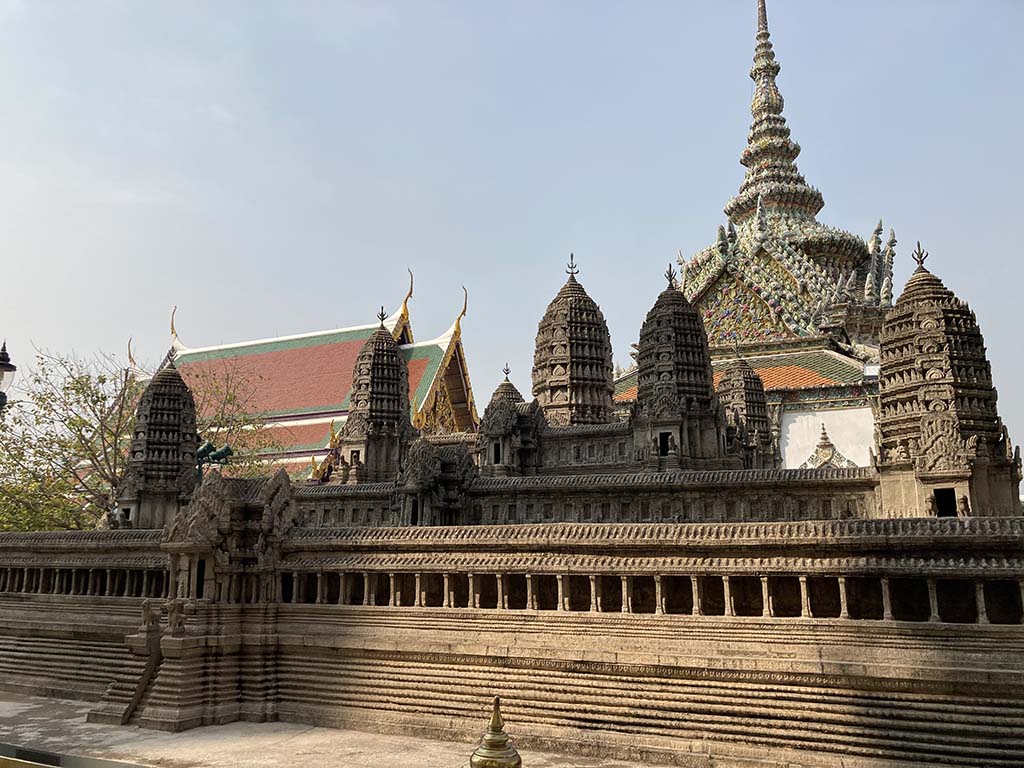
- Replica of Angkor Wat
Angkor Wat was built in the early 12th century by King Suryavarman II of Khmer empire (Cambodia) and is one of the largest religious monuments in the world, located in Cambodia. During 1867, King Rama IV of Siam (Thailand) commissioned a project to replicate the Ankor Wat to symbolize Siam’s influence and cultural ties with its neighboring regions. The project was completed later during the reign of King Rama V.
Opening Hours
The Grand Palace and The Temple of the Emerald Buddha opens daily from 8:30-16:30.
Ticketing office opens daily from 8:30-15:30.
Entrance Fee
– 0 Baht (Free) for Thai citizens.
– 500 Baht for non-Thai citizens. The entrance fee includes access to 3 areas inside: The Palaces area, The Temple of the Emerald Buddha and Queen Sirikit Museum of Textile. The ticket also includes a session of Khon performance at Sala Chalermkrung as well.
Dresscode
The temple of the Emerald Buddha is located in the Grand Palace area. Therefore it is STRICT with the dress code. Please read about the dresscode from this link.
How to get there?
The temple of the Emerald Buddha is located at the heart of Ko Rattanakosin area in which there are many interesting places nearby in a walking distance. Please read about the transportation to this area from this link.