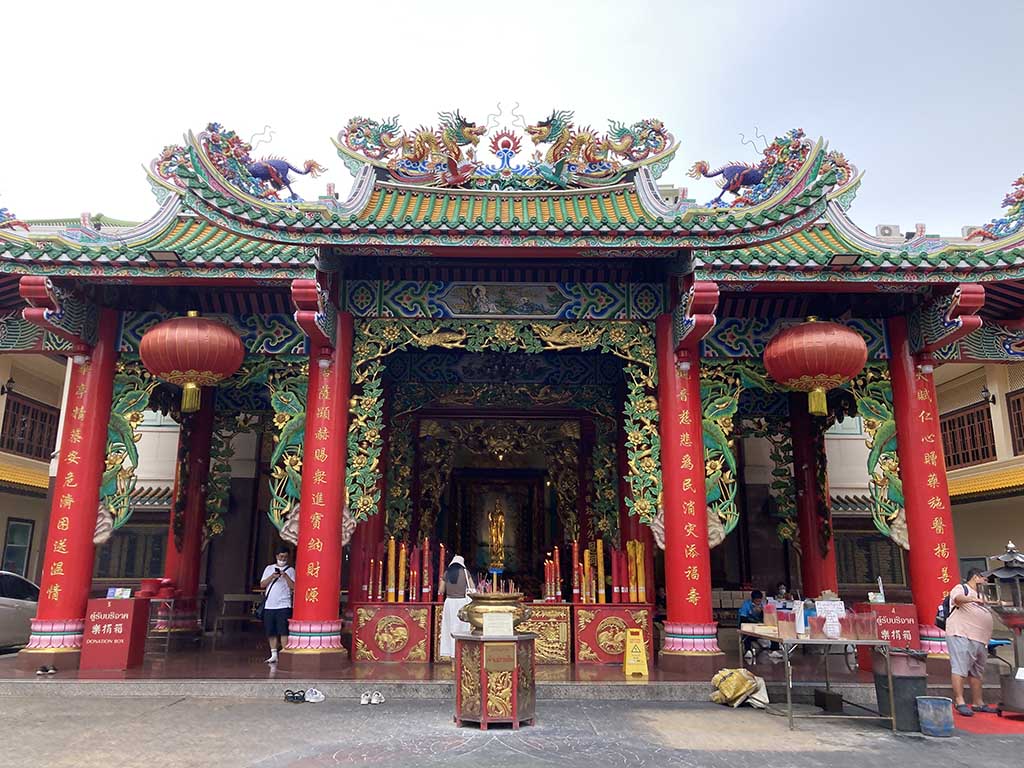
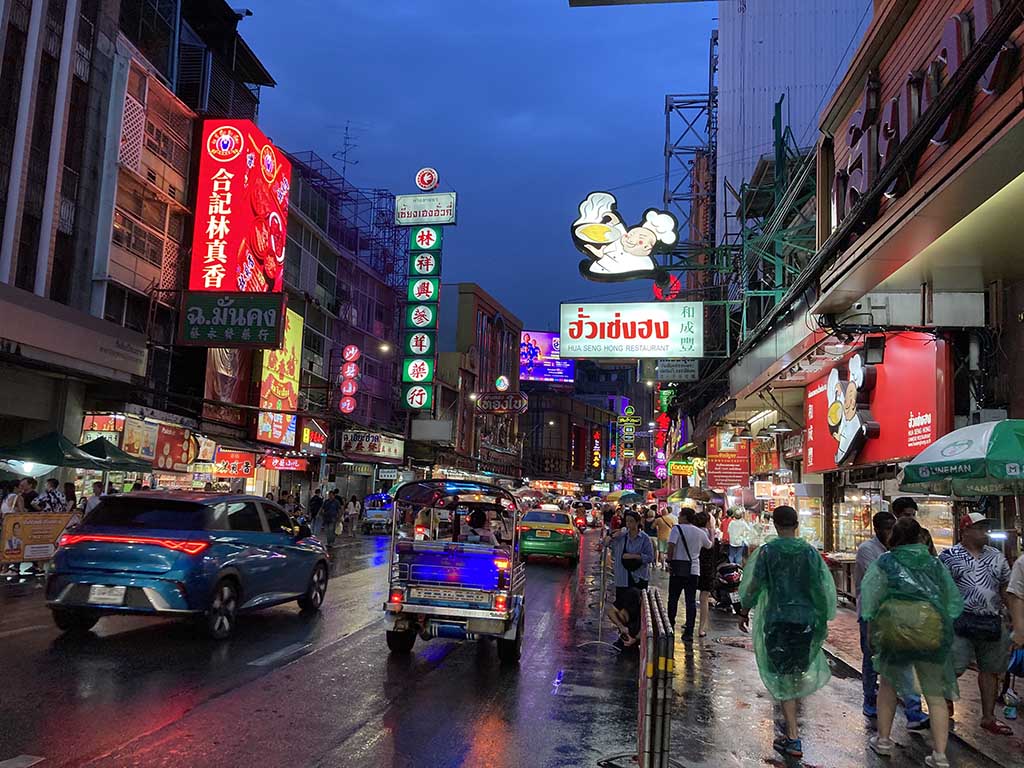
Not only Chinese temples, shrines and shopping places, Yaowarat is also well known as the origin of ‘authentic’ Chinese food in Thailand. You can find many Chinese dishes, milk tea shops and snacks all round the area which are open both day and night. In this article, we will recommend the dishes you may never experience before and should not miss.
What is the recommended food in Yaowarat Chinatown?
Rare Chinese seafood dishes
You may have heard or even tasted typical Chinese seafood dishes such as sea bass with soybean sauce or steamed prawns with glass noodles in a clay pot before. But those are too common for the Chinatown title. Instead, here are the dishes you can find in this area, and of course it tastes nice as well.
Oyster Omelette (Hoy Tod)
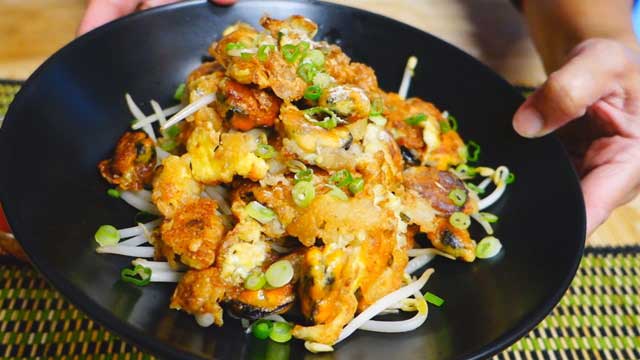
Let’s start from the basic dish. A crispy omelette filled with oyster, served on top of bean sprout and some hot sauce. To get the best experience from this dish, please cut the omelette in a small bite, always dipped it with the sauce and eat together with some bean sprouts.
The secret of this dish is in the sauce, each shop may have their own ‘secret sauce’ or special kind of sauce which can give you a different taste and experience of the same dish.
Fish Maw Soup (Kra Poh Pla)
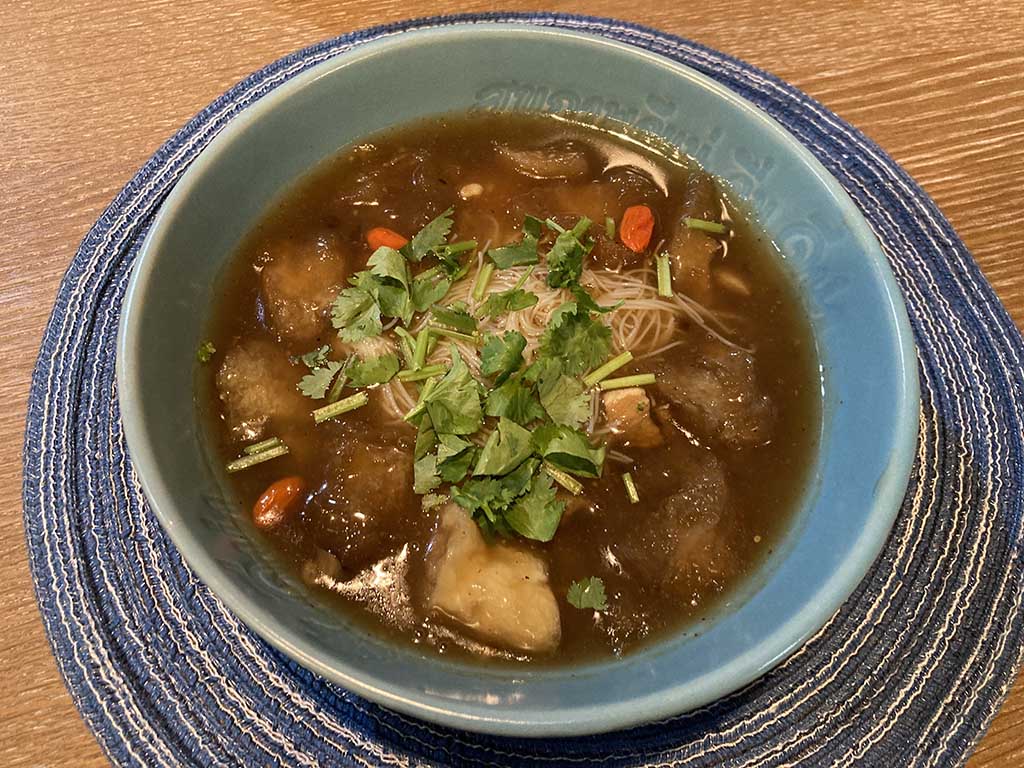
Actually, this is not a rare dish for most Thai, but the delicious one is quite difficult to find. The key ingredient of this dish is the ‘fish maw’ and the quality of the fish maw will change the entire experience of the dish. Of course every shop in this Chinatown always uses the decent quality one which guarantees your best experience of the dish.
High quality fish maw gives you a soft, crispy and a bit chewy texture at the same time when you taste it. Having a bite of fish maw and followed by a sip of warm soup which has a great smell of chinese herbs and shiitake mushroom, is the best way to experience the dish. The soup will be served with shredded chicken on top as well as small portions of noodles. You can always choose to eat with or without noodles, just let the seller know your preferences when you order.
Shark Fin Soup (Hoo Cha Lam)
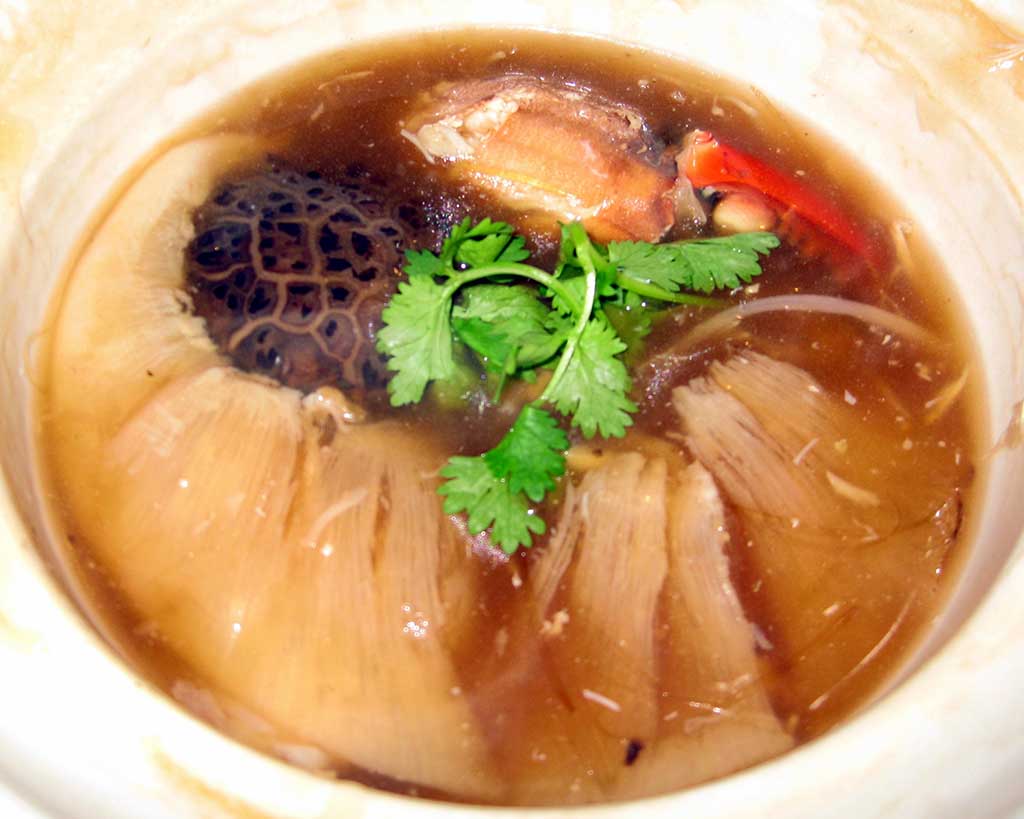
In ancient times, Chinese people believed that shark fin soup was the ‘elixir of life’ which was an exclusive dish only for the emperor. Nowadays, science has proven that it is not nutritionally the elixir of life, but the belief in the exclusivity of the dish and a symbol of luxury is still carried until now. The dish will be served only during special occasions or celebrations such as marriage ceremonies or celebration of a company anniversary, etc.
The dish itself is created in the same style as a fish maw soup but using shark fin instead of a fish maw. The shark fin itself does not have any taste. It only gives the slightly crispy texture to the dish. If you find visiting Yaowarat Chinatown a special occasion for you, you should treat yourself with this dish.
Bird’s Nest (Rang Nok)
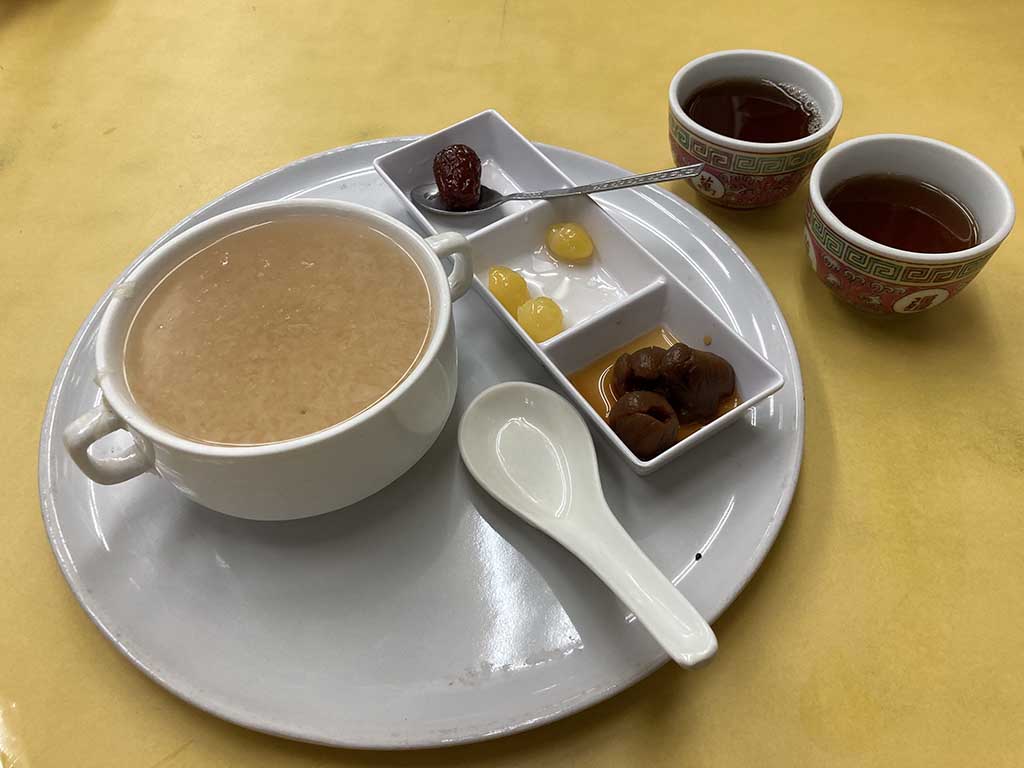
Bird’s nest may sound like something that shouldn’t be eaten, but in fact, bird’s nests used for a dish are made from the nests of the edible-nest swiftlets, which are made from their own saliva – not a branch of a tree. This kind of bird’s nests are rare to find in nature. However, the good quality ones can be found in this Chinatown.
Normally, Bird’s nest is eaten as a soup. It has high protein and a naturally sweet taste. Some shops may add a little sugar or serve with chinese traditional sweets to make it refreshing. Many shops may ask if you want hot or iced soup. It is recommended to eat a hot soup to get the best texture of the bird’s nest.
Last thing you should know is the bird’s nest shop always offers this dish at many prices depending on the quality and the sources of the bird’s nest they use. If you want to experience the dish for the first time, it is recommended to go with the lowest one which should be around 200-300 Baht per dish. Try it at least once, even though it sounds strange.
Fishball Noodles (Kuay Tiew Look Chin Pla)
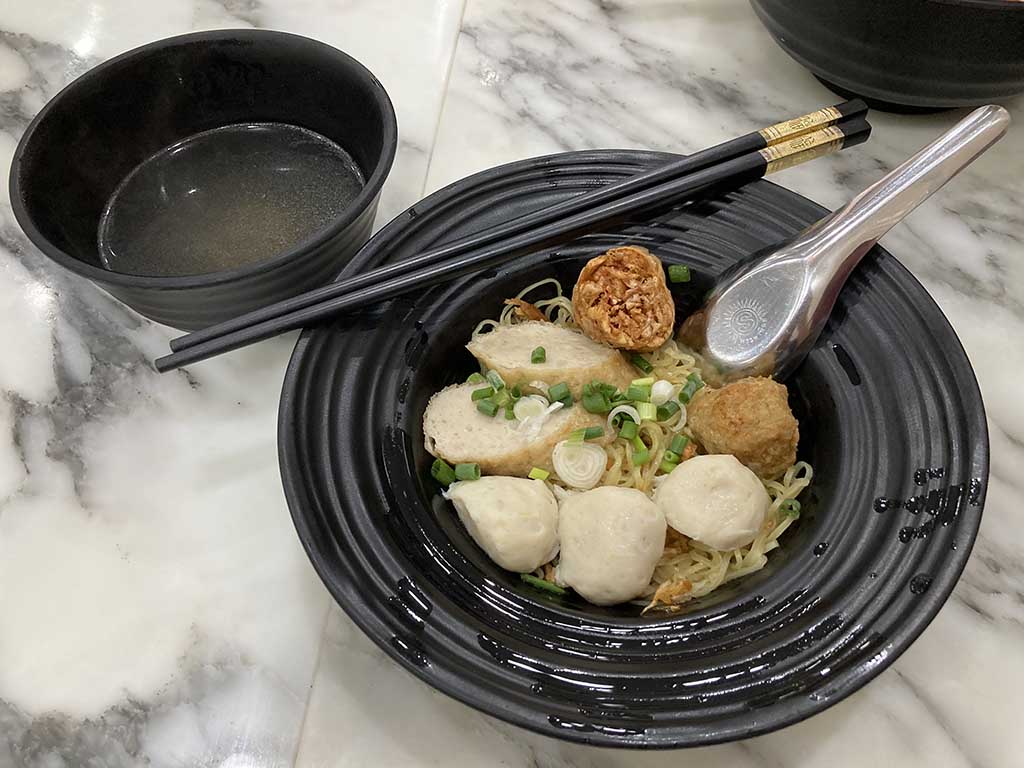
There are varieties of noodles you can find in this area, for example noodle with dumplings or noodle with roasted duck, but the special kind of noodle in this Chinatown is noodle with fish ball. Why is it so special? Big, crispy and no smell of fish. These are the signatures of the ‘authentic’ fish ball from Yaowarat which are difficult to copy.
The fishball noodle shop usually offers various choices of noodle such as yellow egg noodle (Ba Mi), white noodle in big shape (Sen Yai), white noodle in small shape (Sen Lek) or tiny white noodle (Sen Mi) in combination with various choices of soup such as normal soup, Tom Yum or Yen Ta Fo.
When you make an order, you need to specify the choice of noodle and soup as well as type of noodle. In the case of fish ball noodles, if you want to order it with the choice of yellow egg noodle in Tom Yum soup, then you say “Ba Mi Tom Yum Look Chin Pla”. If you don’t specify the choice of soup, then you will get the normal soup they have.
Always remember Tom Yum and Yen Ta Fo soup can be spicy. You can order them with less or no spicy at all. Just let the seller know your preference.
Chinese Chestnut (Kao lat)
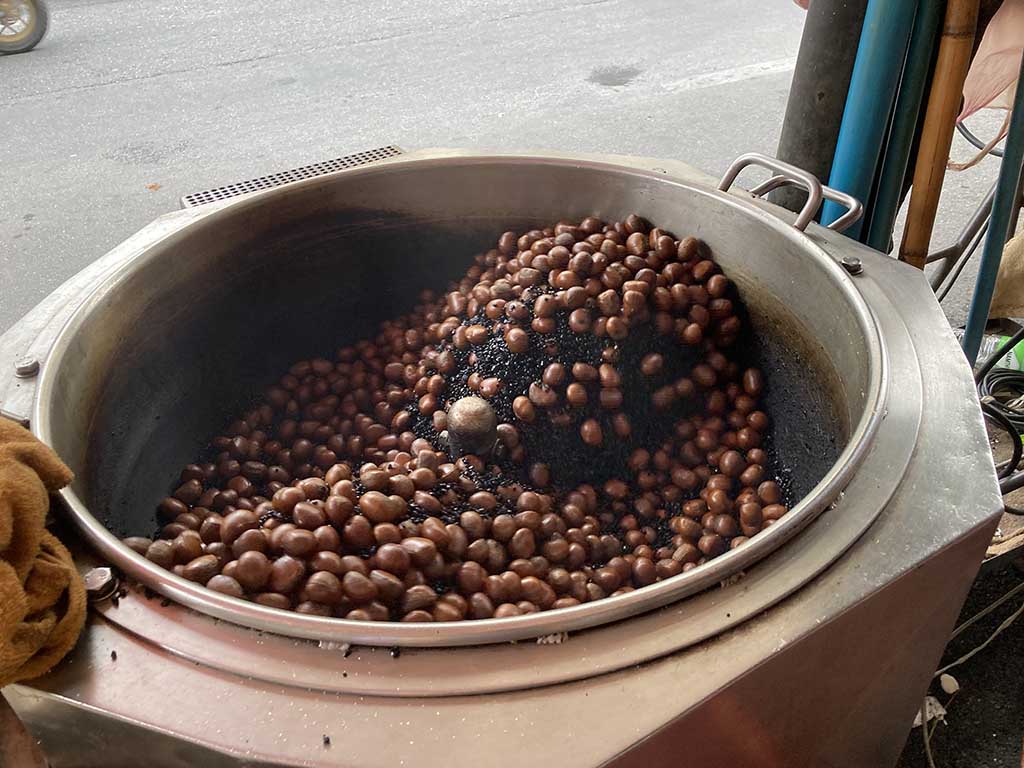
You can find Chinese chestnuts at almost every corner of the street. It usually appears in a chestnut mobile stall, where the seller roasts the chestnuts on the hot rocks before packing it to you. Make sure you remove the shell before you eat.
Where is the recommended place to eat?
1. Yaowarat Road
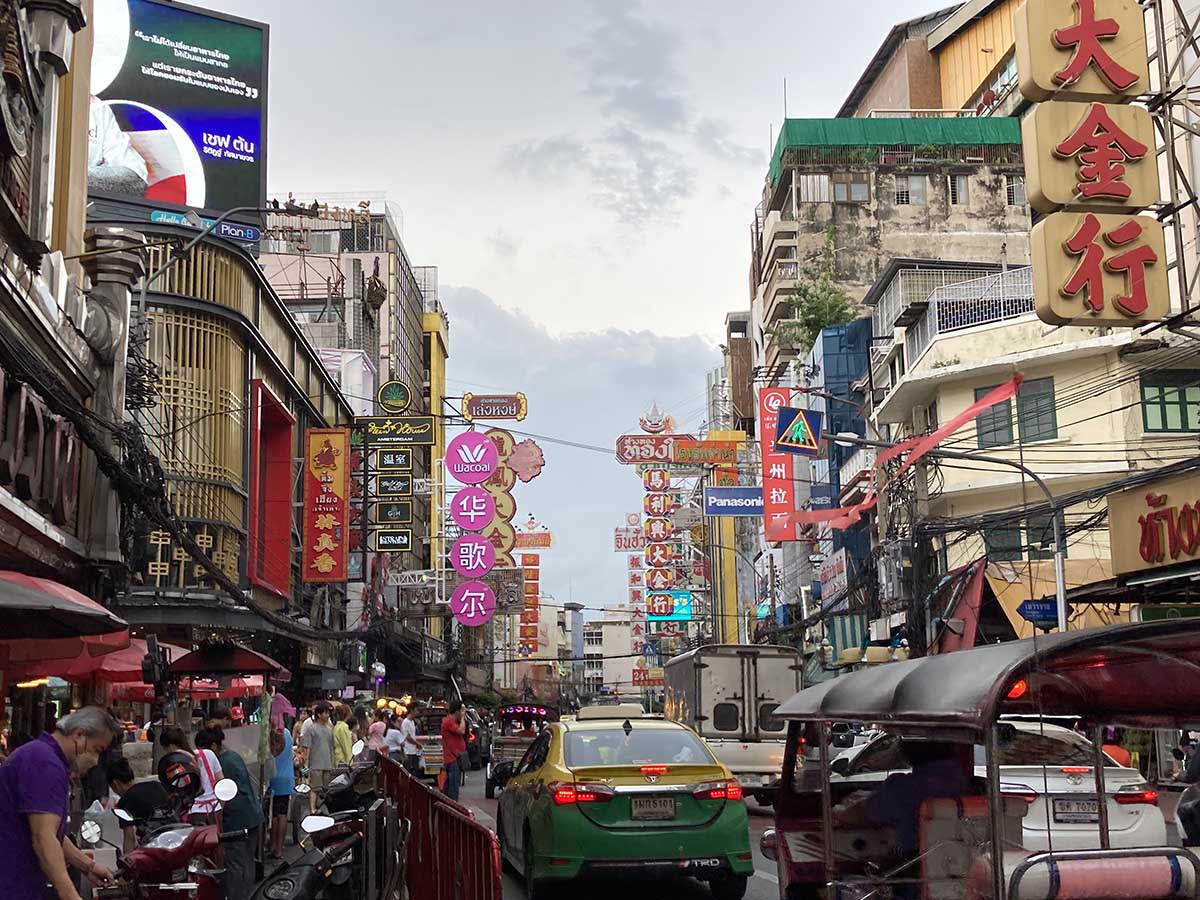
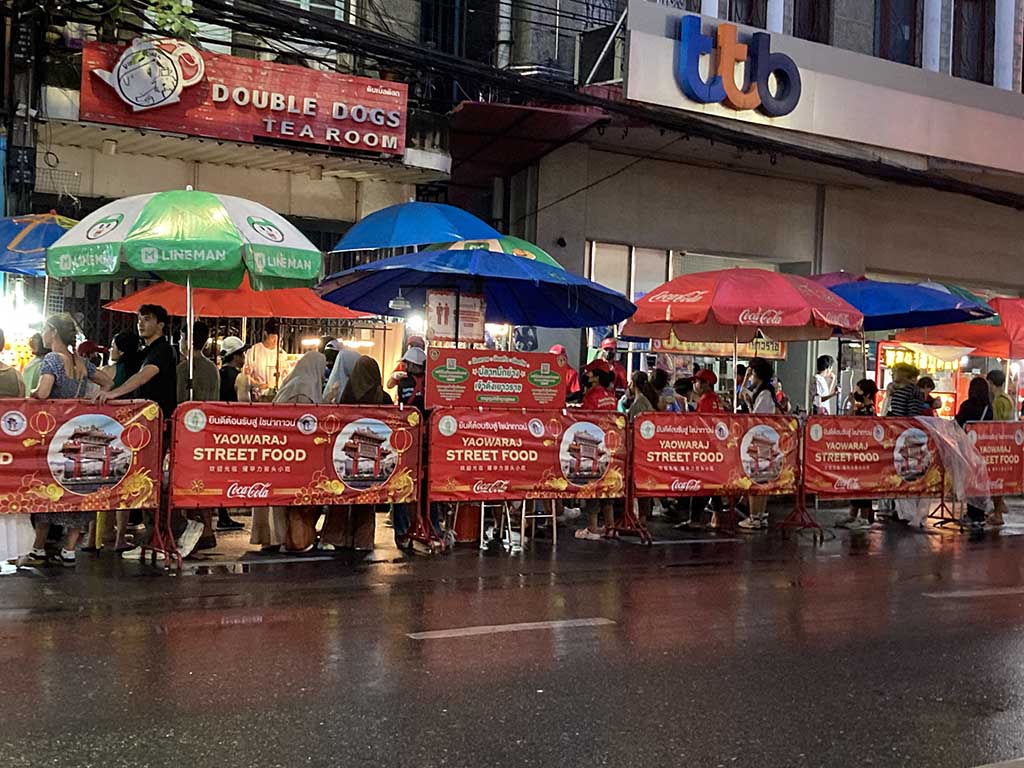
Street food stalls, restaurants mixed with many kind of shops are along the entire street. The area highlighted in the map is where the food and restaurant are most concentrated. Some shops open only during the day, some shops open at night but whenever you feel hungry, there will always be a place for you to dine here.
The special thing about this road is the mobile food stalls will start to occupy the pavement from late afternoon until midnight. This means there will be even more choice of food at night and the road will almost turn into a huge walking street.
2. Plaeng Nam Road
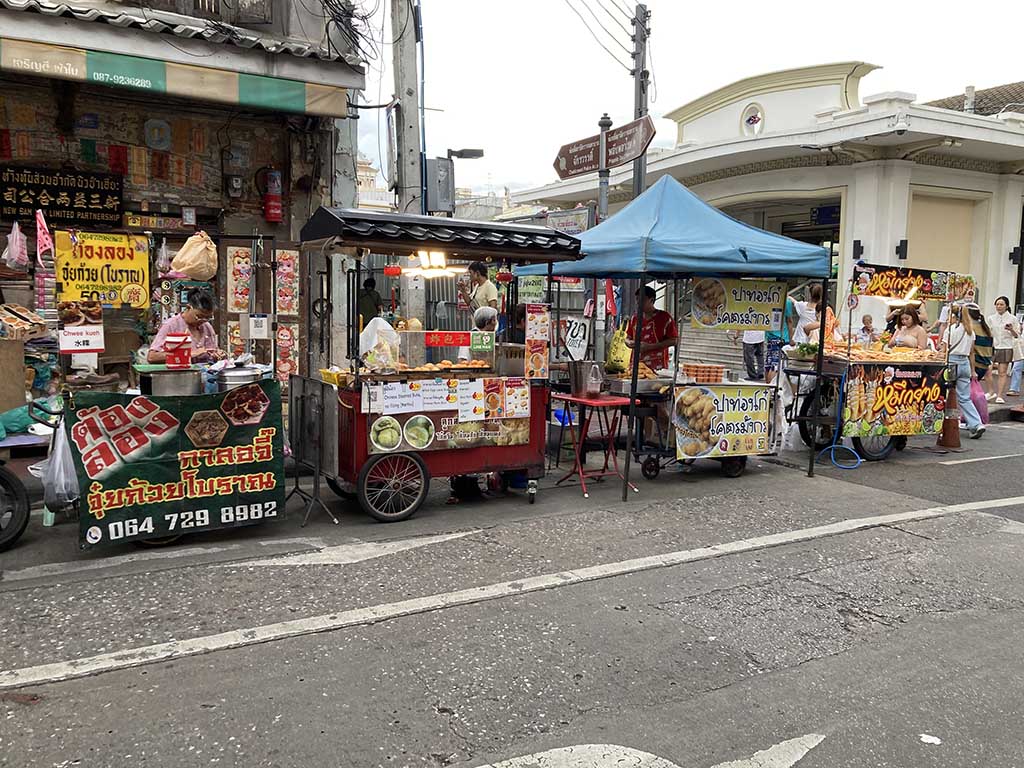
If you come to Yaowarat by MRT, this will definitely be the first street you will be on. Many choices of food you can find here from snacks, heavy meals to desserts. Of course, it is open from late morning until night as well.
3. Phadung Dao Road
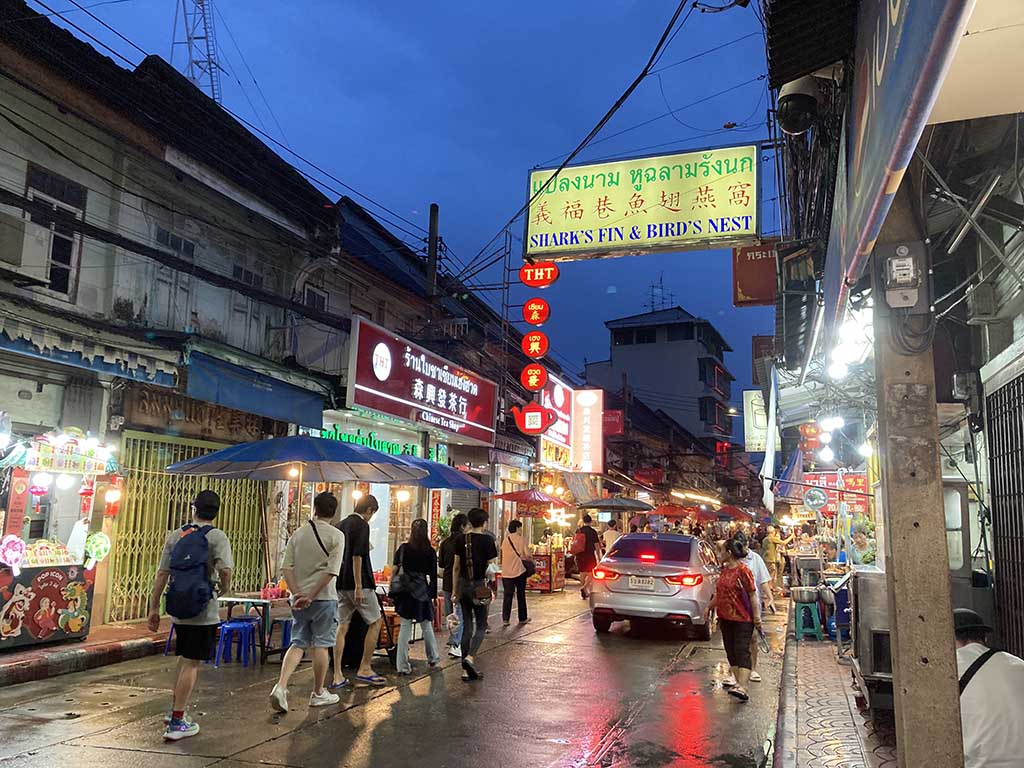
Many choices of food as well as a well-known restaurant and dessert shops can be found here. Most shops open from late morning until night.
4. Charoen Krung Road
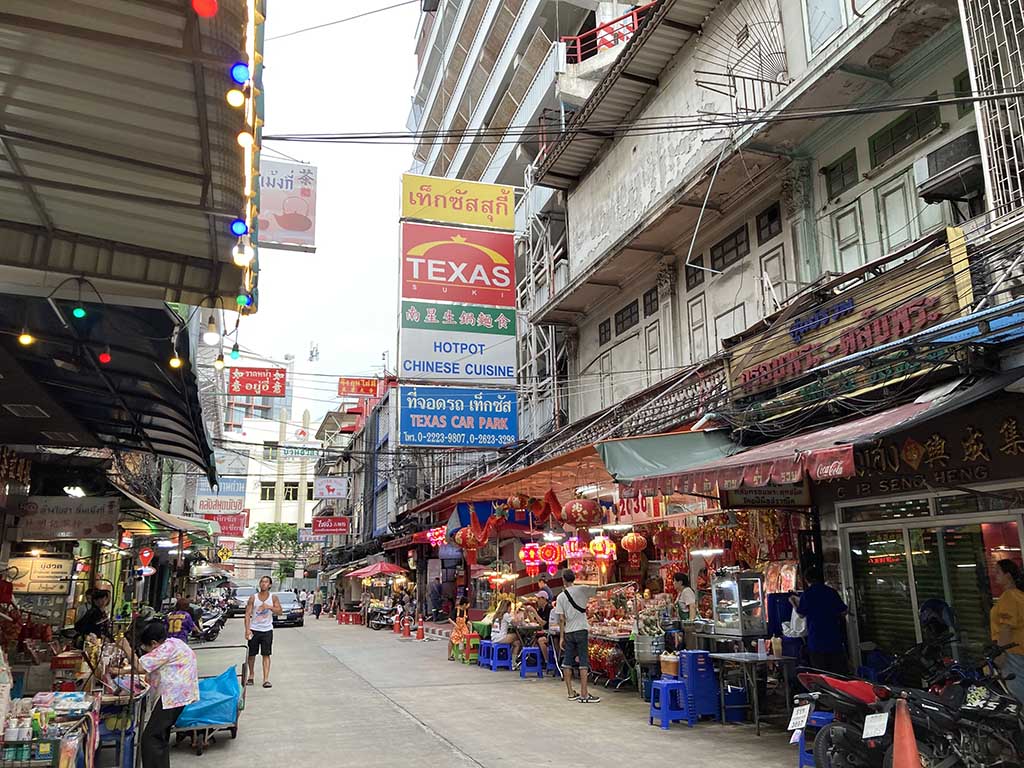
The highlighted area is where the food stalls and restaurants are most concentrated. Since the road connects with Plaeng Nam and Phadung Dao Road, there are many food stalls and restaurants open as well. It is a good option to dine here during the day because many shops in this area open during the day. Moreover, if you are addicted to coffee, you can easily find coffee shops along the street – which are rarely seen in Chinatown.
However, if you are looking for a place for dinner, there are not many choices of food in this area compared to the Plaeng Nam and Phadung Dao area.
5. Phlap Phla Chai Road
If you are familiar with Thai food and looking for simple dishes, dining on this street is a good option. However, most shops and restaurants along this street are open during the day. It is not a good option to visit this street at night.
Opening hours
Most shops open around 10:00~11:00 in the morning and start to close around 23:00. Feel free to visit anytime you want
How to get there?
Just simply walk. The good start is from the MRT Wat Mangkorn Station. You will be at the beginning of Plaeng Nam Road from exit no.1. From there you can cross and continue to walk to Phadung Dao Road or walk along the Plaeng Nam Road to Yaowarat Road.